Floresta Utópica
In 2012, I was invited to create a public artwork in downtown São Paulo. I chose to reveal something invisible: the Córrego das Almas (Stream of Souls), which runs hidden beneath the pavement of Vale do Anhangabaú. Using electroluminescent cables, I conceived “Cachoeira” (Waterfall), showing how we try to control and even conceal the rivers that sustain our cities.
This initial experience motivated a deeper investigation of our relationship with urban nature, leading to research that culminates today in “Floresta Utópica” (Utopian Forest). From channeled water, the research evolved to more complex systems: how an entire forest functions, breathes, and regenerates through invisible networks of interdependence.
Through immersions in various Brazilian biomes and studies of natural temporalities, I was able to identify the mismatch between urban rhythms and organic cycles. In the city, everything is urgent, noisy, artificial. In the forest, time operates on different scales: a seed can take 30 days to germinate, a tree, decades to reach its fullness. My experience with agroforestry and heirloom seeds revealed that nature has its own temporalities and instruments of regeneration.
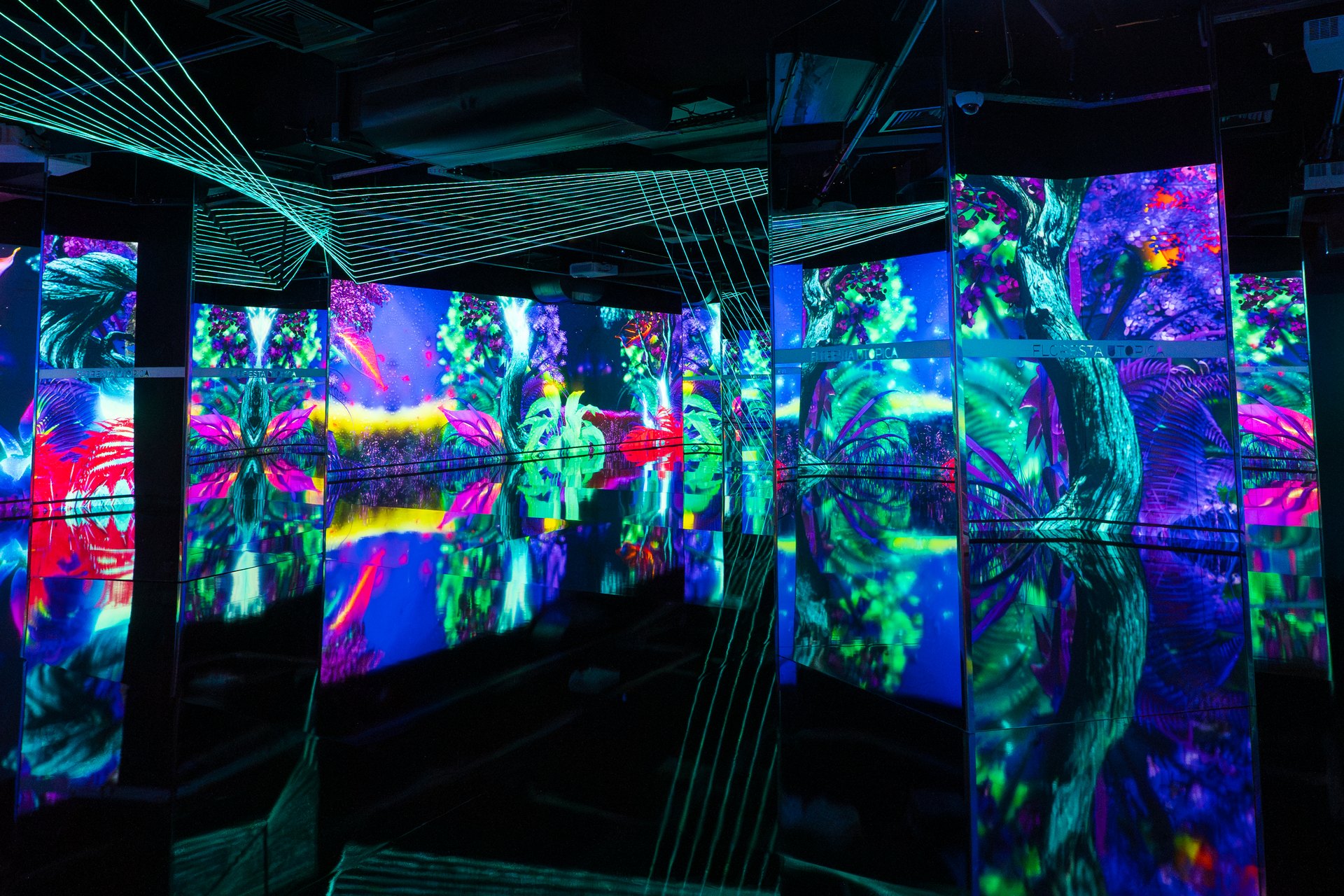
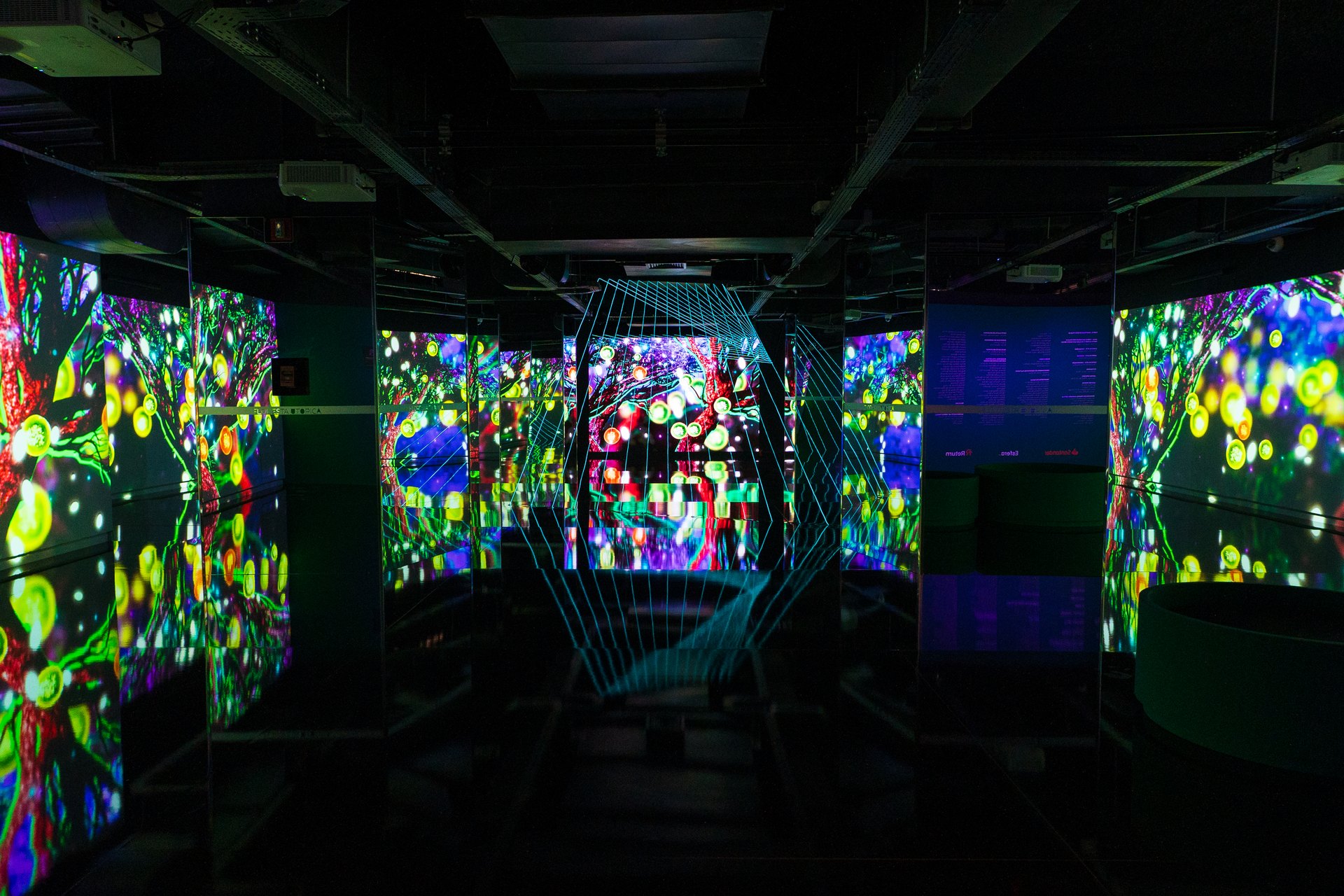
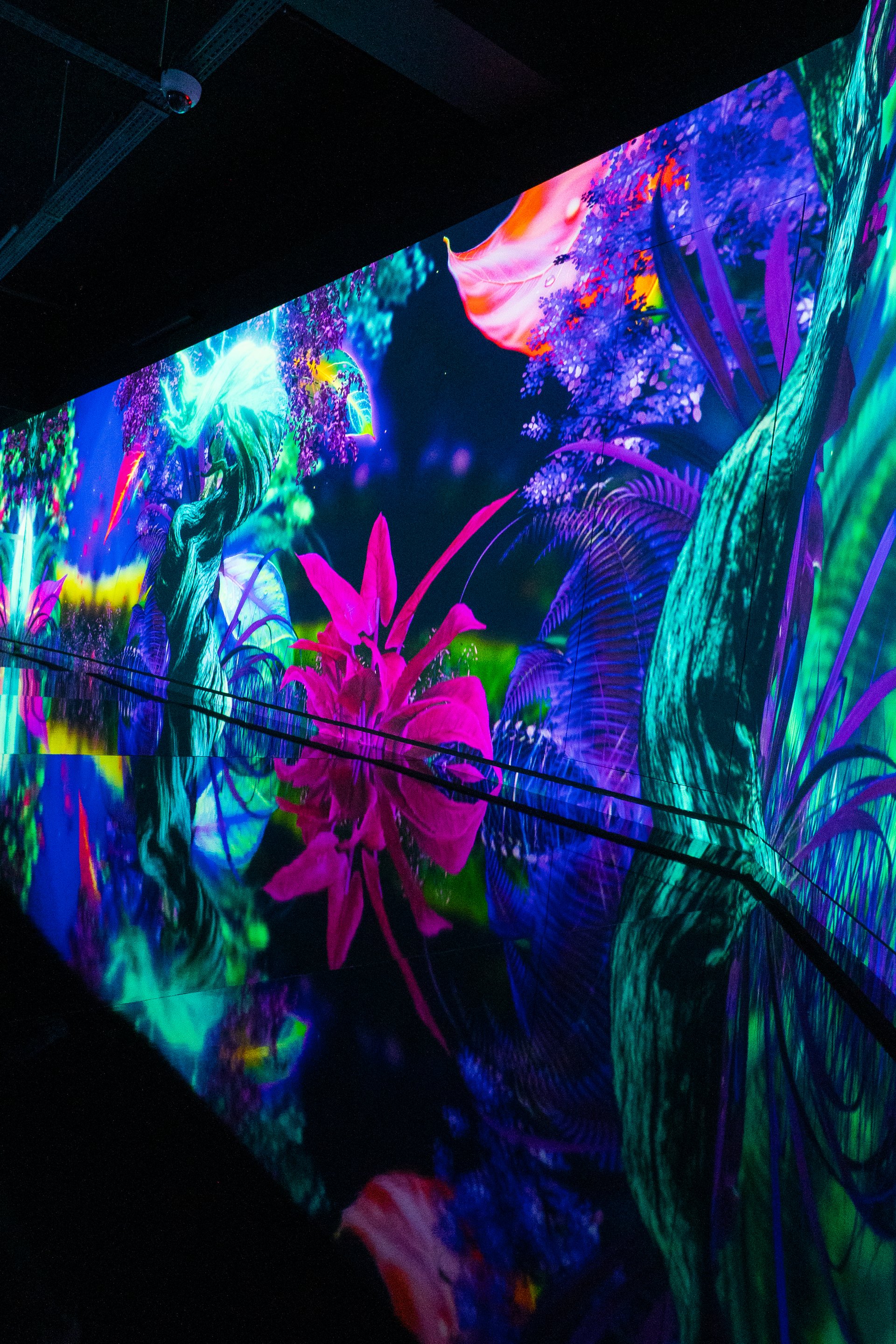
At AYA, we materialized this experience of dilated time through a 20-minute immersive installation, where our multidisciplinary team develops mapped projection, sound design, and aromas that interpret forest cycles. The proposal doesn’t literally reproduce nature, that would be impossible and would lose potency. We prefer to reveal the invisible connections between plants, fungi, soil, and water, highlighting the energy networks that make a forest a single organism.
The luminous sculpture at the center of the space connects this work to my previous research on the presence of water. The aromas of wood and plant essences activate affective memories, calling the entire body into this experience. The audiovisual script reveals storms, germination, growth, flowering, and fruiting, a continuous cycle of regeneration, with no defined beginning or end.
This utopian forest is not only in the future: it exists as potency in the present, waiting for us to develop the necessary sensitivity to inhabit it.
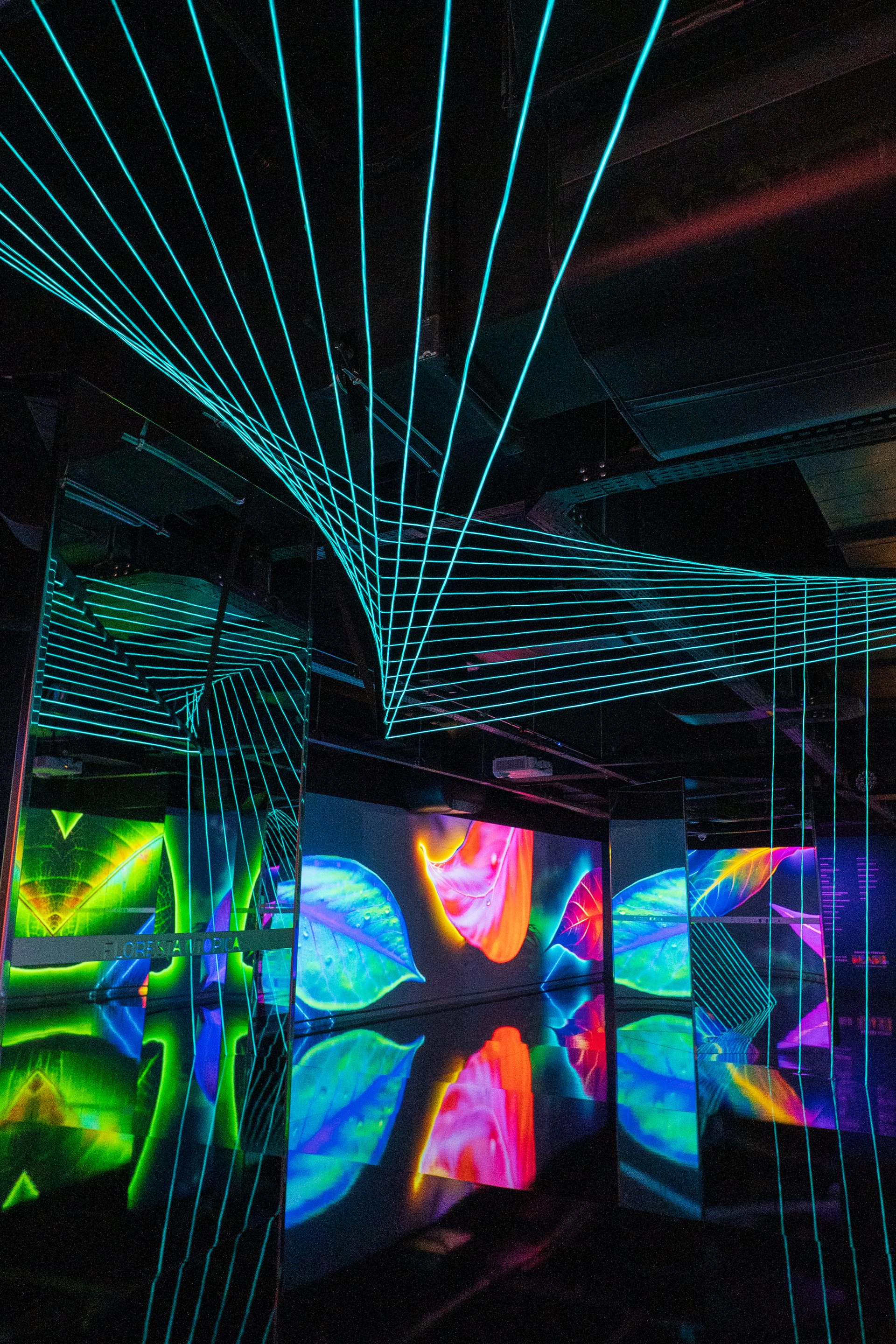
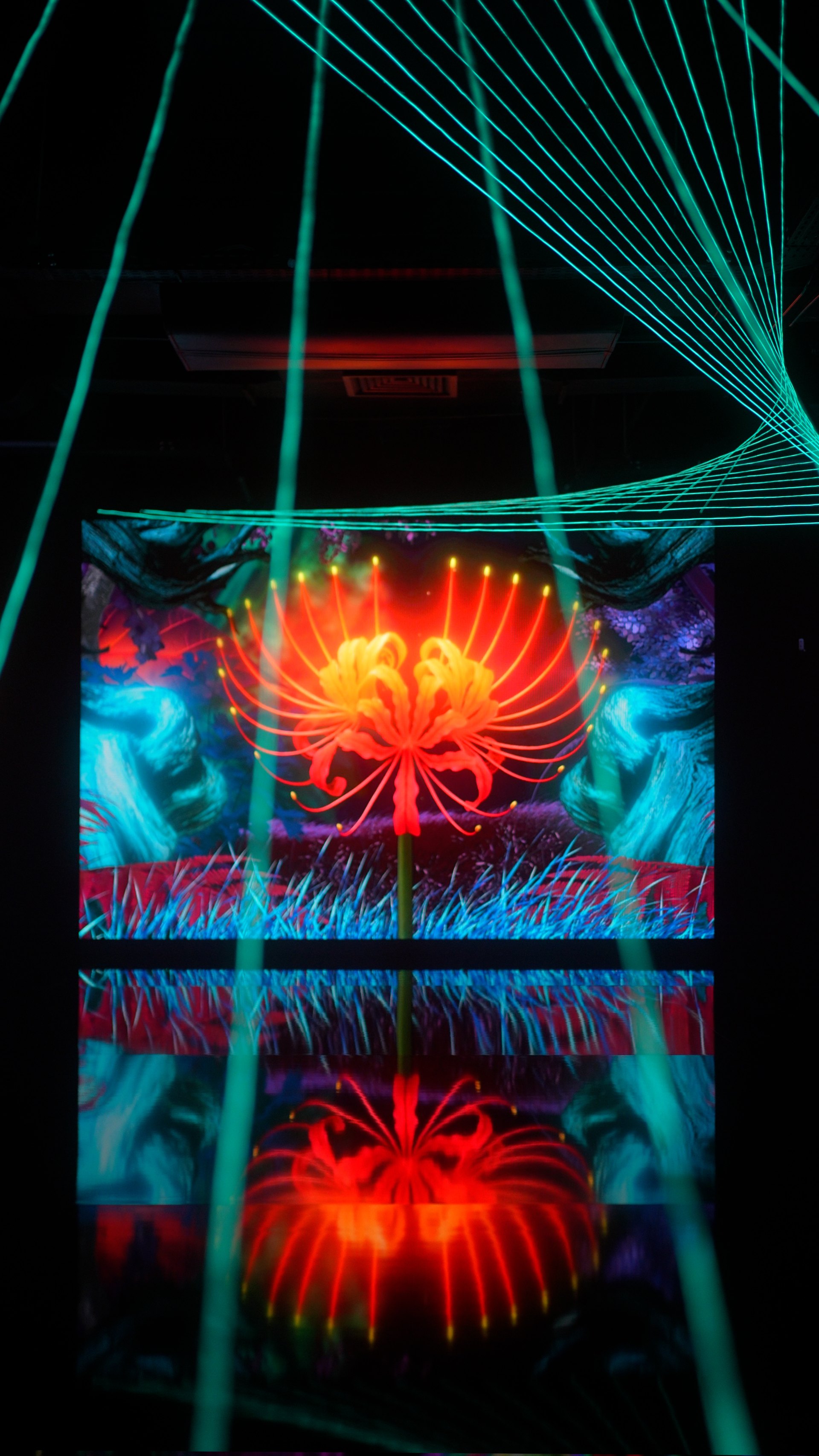
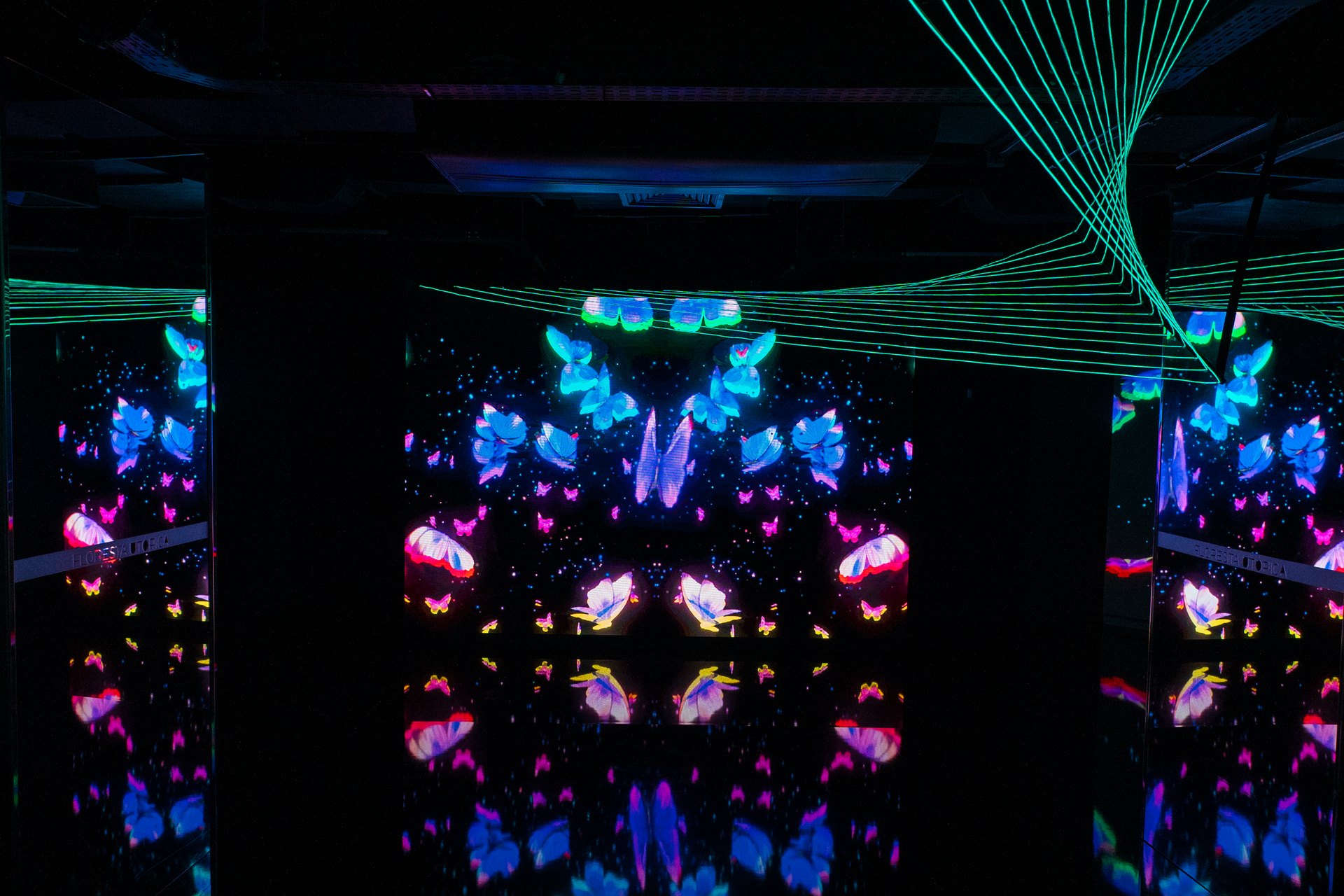
Felipe Sztutman's authored work about forest temporalities and invisible systems of interdependence, structured by projection, aromas, and a light sculpture in the form of a waterfall.
- Number
- 014
- Editorial status
- Felipe-authored work
- Reading regime
- space / circulation / collaboration
- Status
- REALIZED
- Year
- 2025
- Location
- Farol Santander São Paulo
- Context
- série dos Elementos / terra
- Type
- EXPOSICAO IMERSIVA
- Series
- Os Elementos
- Technique / medium
- projeção · espelhos · aromas · escultura de luz
- Realization
- AYA Studio · Farol Santander
- Site
- Farol Santander São Paulo, 2025
- Duration
- 20-minute immersive installation
- Structure
- Mapped projection, sound design, aromas, and central luminous sculpture
At AYA, the work is built by translating ecological processes into spatial language. Rather than literally reproducing nature, the team organizes image, sound, aroma, and light to make the invisible networks between plants, fungi, soil, and water perceptible.
Public connections that situate this work inside the archive before the narrative text.
Floresta Utópica should be read in the archive as Felipe's authored exhibition and as a late unfolding of Cachoeira and Mantiqueira: water and invisible systems reappear here not as urban intervention, but as immersive ecology.