O Que Nos Une
In 2025, neuroscientist Miguel Nicolelis invited me to translate his theories about collective consciousness into immersive experiences. It was a fascinating challenge: how to transform neuroscience into inhabitable space? How to make someone feel, not just understand, that democracy, money, happiness are abstractions that emerge from individual minds working together? I designed the space and conceived technically and artistically three interconnected environments, each revealing a layer of this invisible network that connects us. Antonio Curti brought the artistic curation, Miguel the scientific one. AYA Studio executed it.
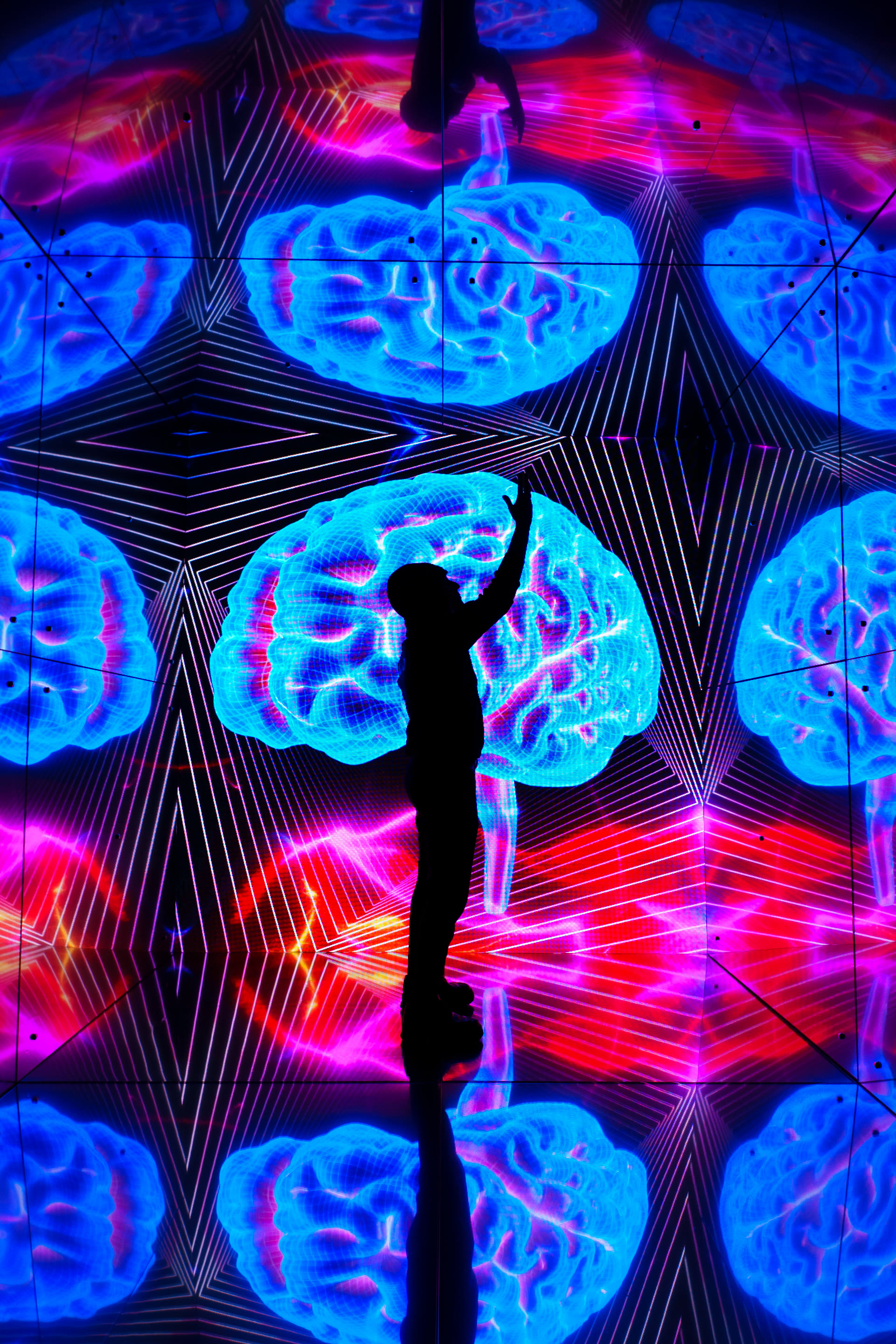
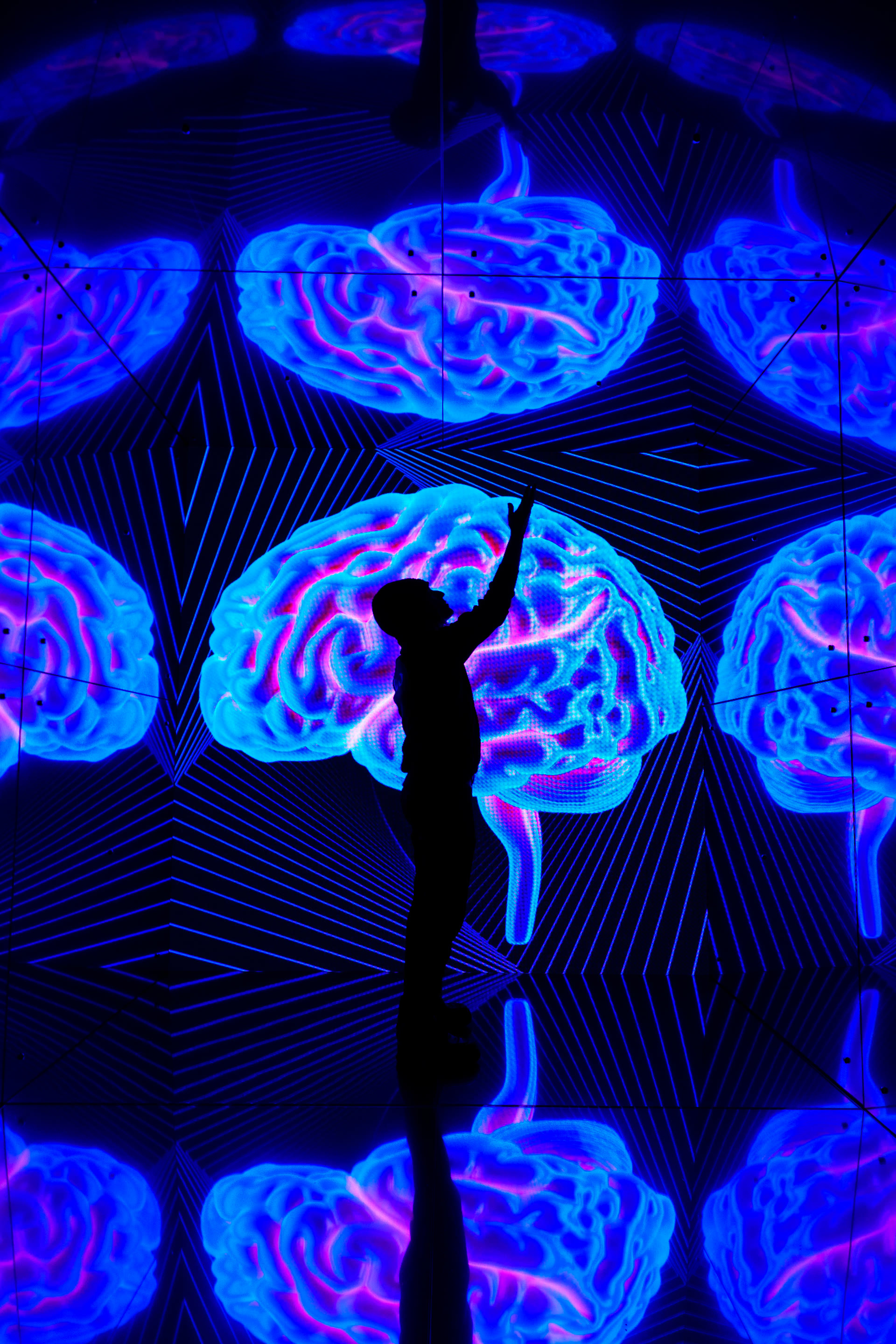
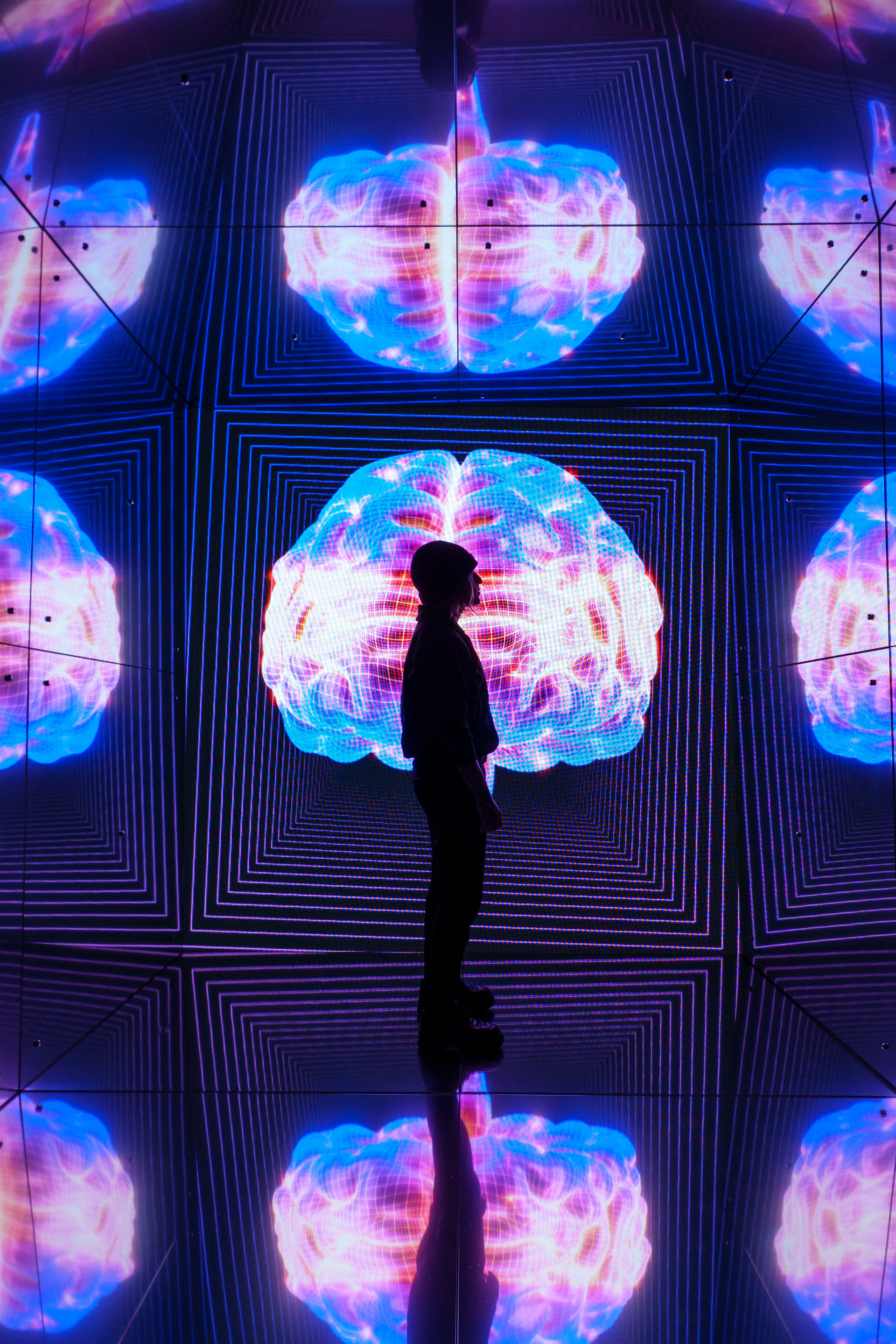
The exhibition is a journey from the individual to the collective. It begins in a chamber of mirrors and LEDs, a prismatic structure designed by Tiago Guimarães that evokes the inside of a brain. It continues to an interactive floor where visitors become neurons in a living network: cameras detect position, algorithms generate patterns in real time, panoramic projections respond to collective movement. This system was developed by Matheus Leston in Max/MSP, it’s not pre-recorded video, it’s live-generated imagery. It ends in a biometric synchronization chamber: custom sensors we developed capture heartbeats and translate them into light and sound. When visitors’ hearts begin to pulse together, the room responds. It’s measurable synchrony, not metaphor.
It was on display for three months at Centro Cultural FIESP in São Paulo, from October 2025 to February 2026. The exhibition will tour, MIS Ceará is already confirmed. Each new installation requires complete adaptation: the immersive room needs high ceilings for suspended cameras, the mirror chamber is rebuilt from scratch for the space, the biometric sensors travel with us because there are no equivalents. It’s not technology for technology’s sake, each system serves the scientific and artistic concept. Visitors don’t learn about collective consciousness. They experience it.
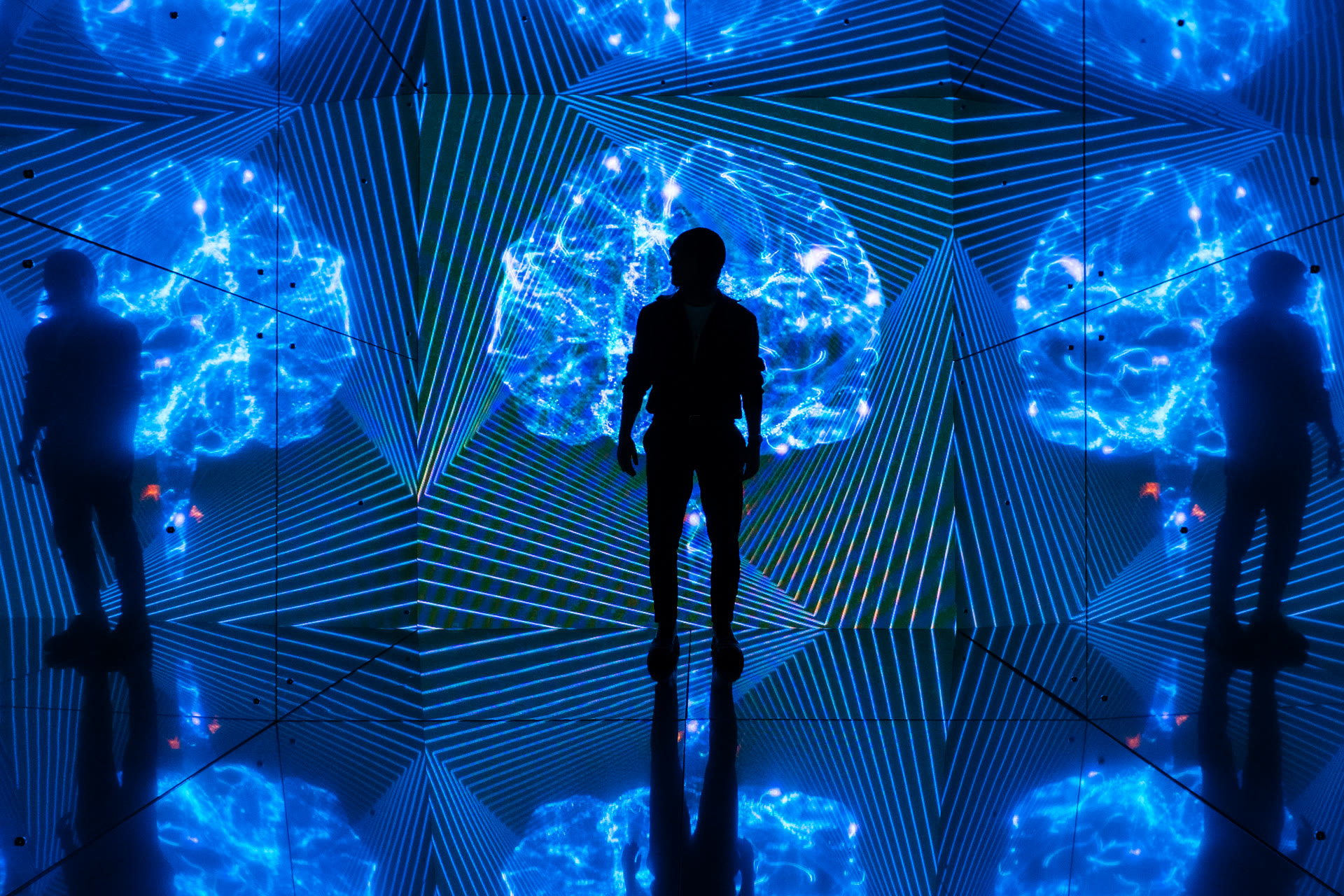
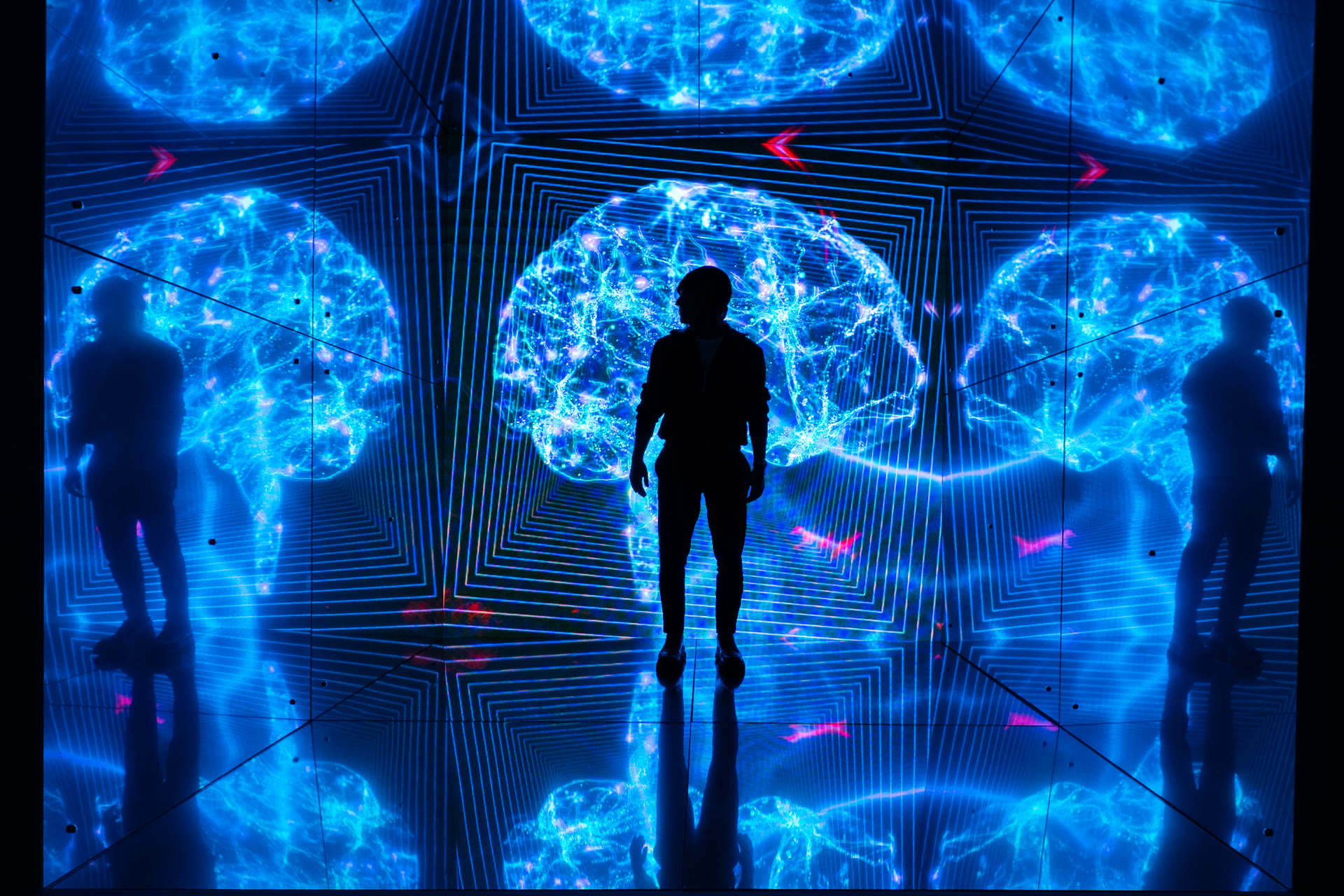
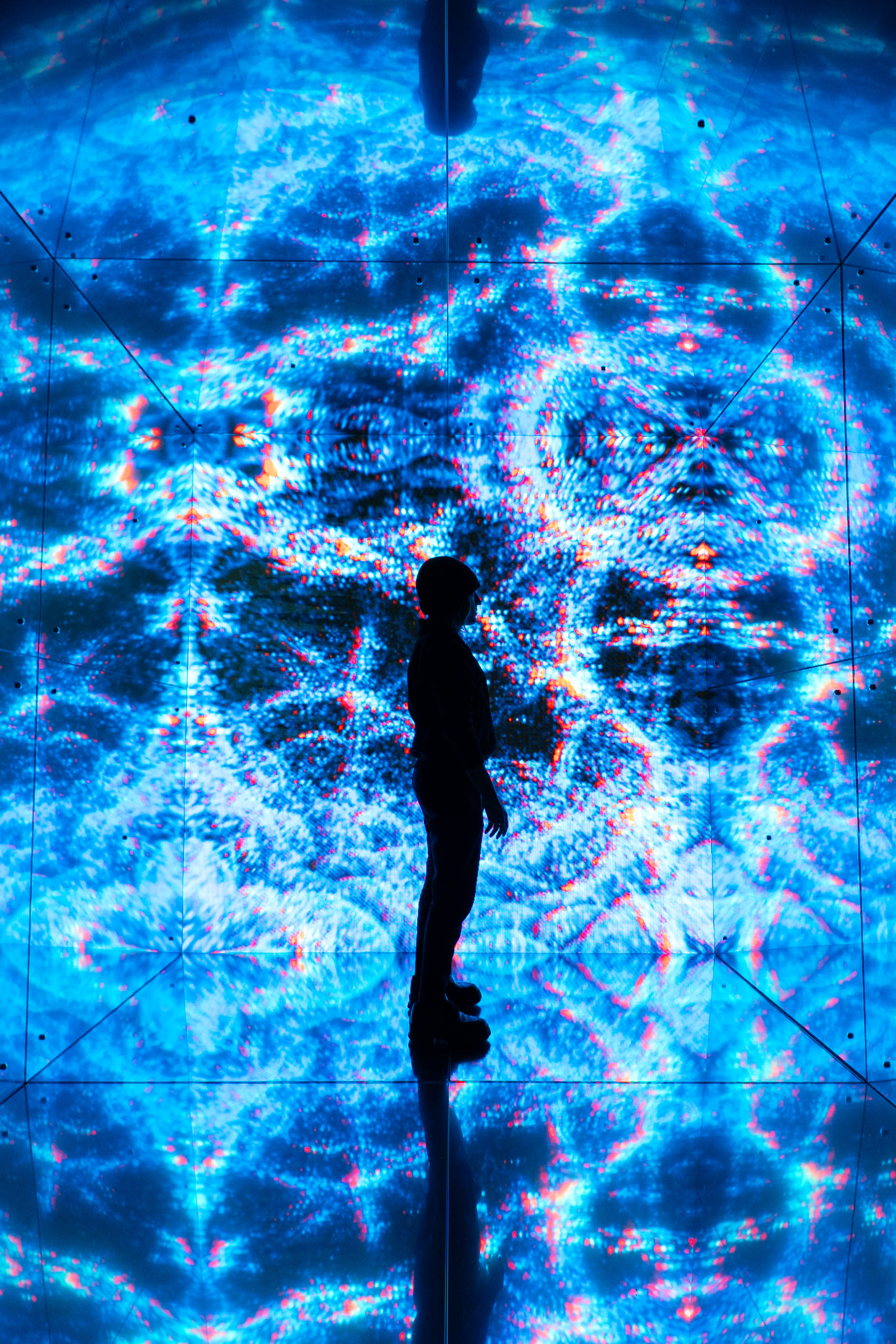
System-installation in three environments: visitors move through mirrors, cameras, and heartbeat sensors to perceive network patterns and collective synchronization in their own bodies.
- Number
- 013
- Editorial status
- thematic / collective exhibition
- Reading regime
- system / body / mechanism
- Status
- REALIZED
- Year
- 2025
- Location
- Centro Cultural FIESP, São Paulo
- Context
- instalação-sistema / Nicolelis
- Type
- INSTALACAO
- Technique / medium
- espelhos · sincronização biométrica · sensor · projeção
- Structure
- Three connected environments: mirror and LED chamber, interactive floor, and biometric synchronization chamber
- Body
- Visitors enter as measurable physical presence: floor position and heartbeat in the final chamber
- Tracking
- Cameras detect visitors' positions and feed patterns generated in real time in Max/MSP
- Synchronization
- Custom sensors capture heartbeats and translate them into light and sound, when heart rhythms approach each other, the room responds
- Question
- How can collective consciousness stop being an explanation and become a bodily experience?
Public connections that situate this work inside the archive before the narrative text.
In the archive, O Que Nos Une should be read less as a generic immersive exhibition and more as a perceptual mechanism: mirrors, position tracking, and biometric sensors make the idea of collective consciousness depend on visitors' presence and synchronization.