Cachoeira
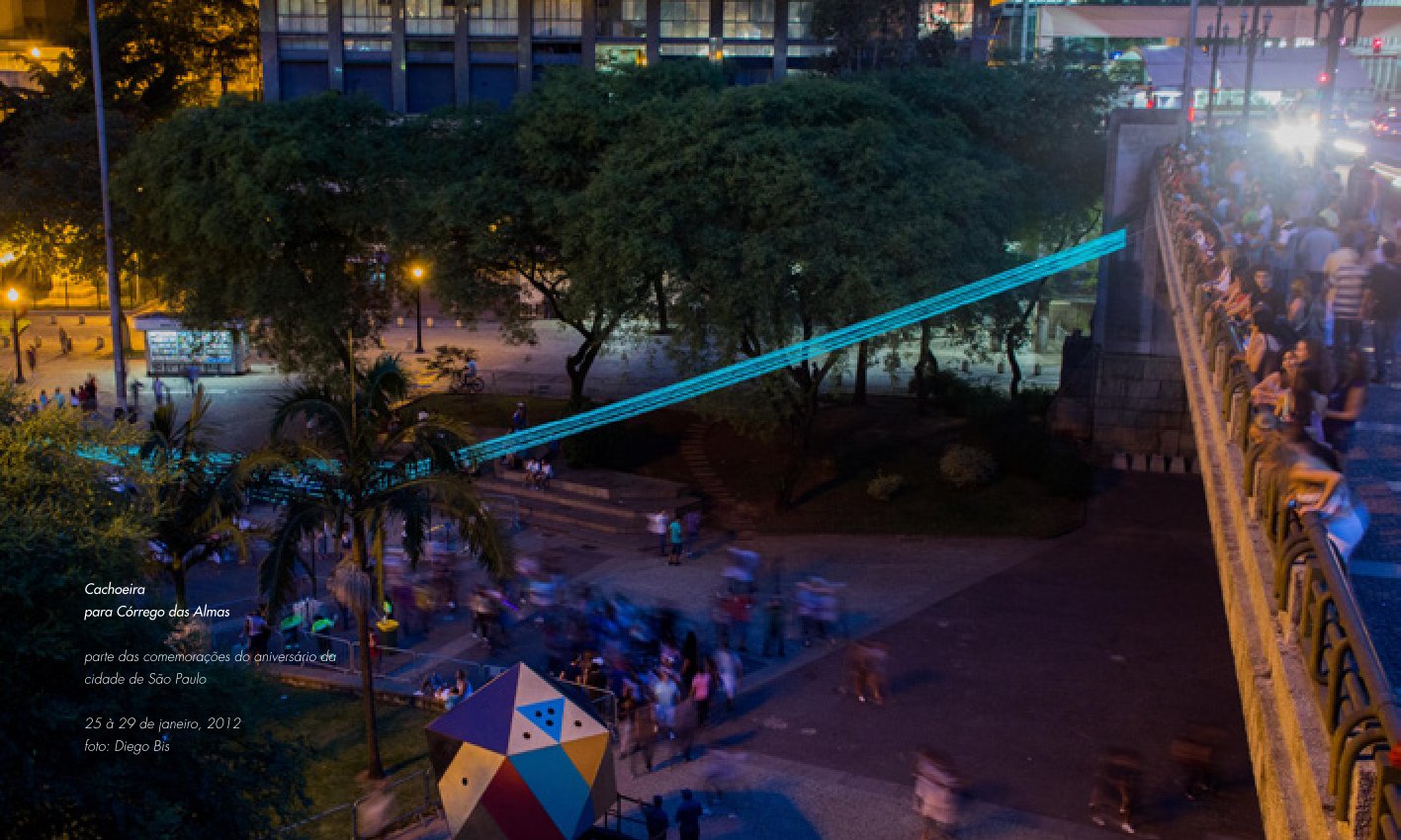
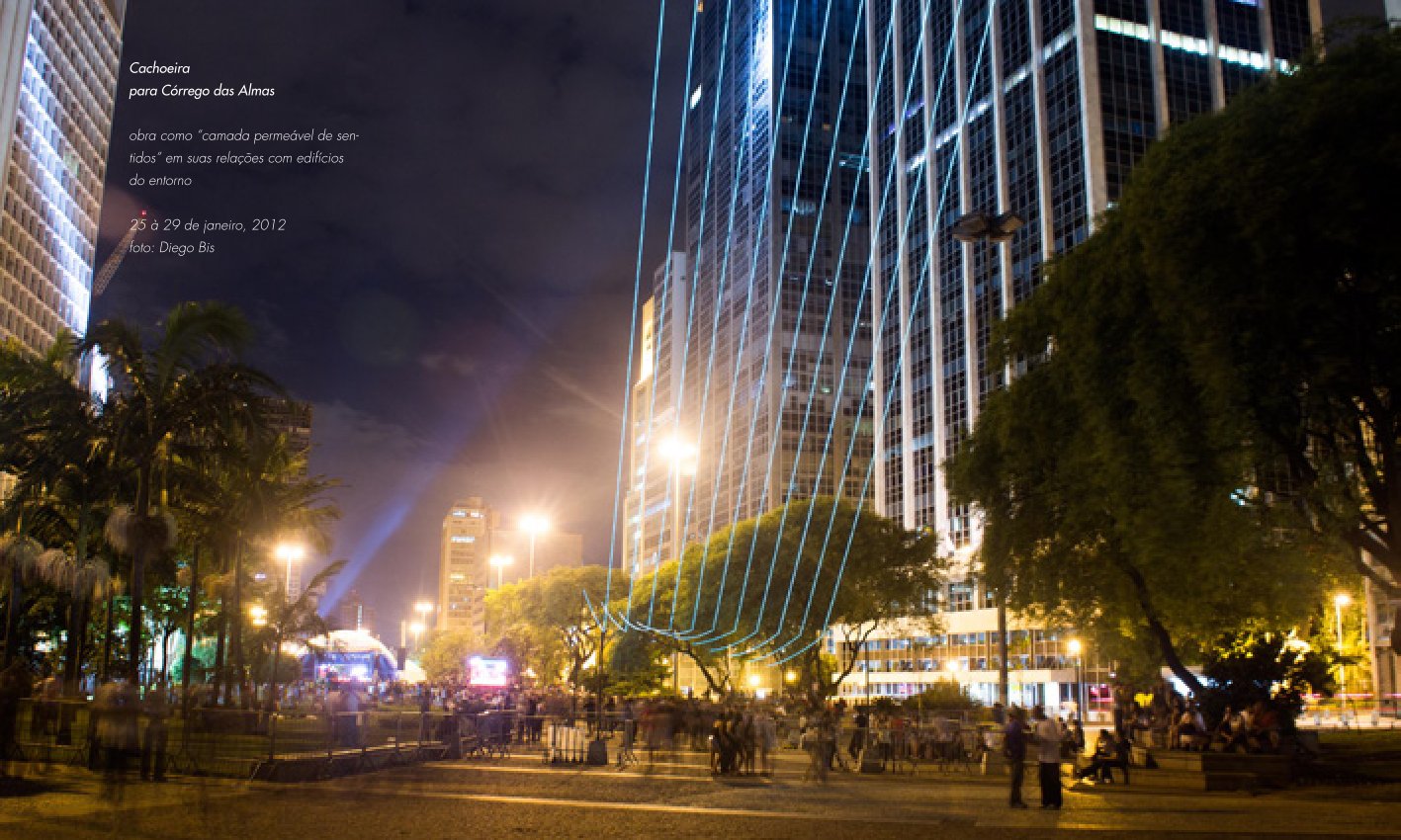
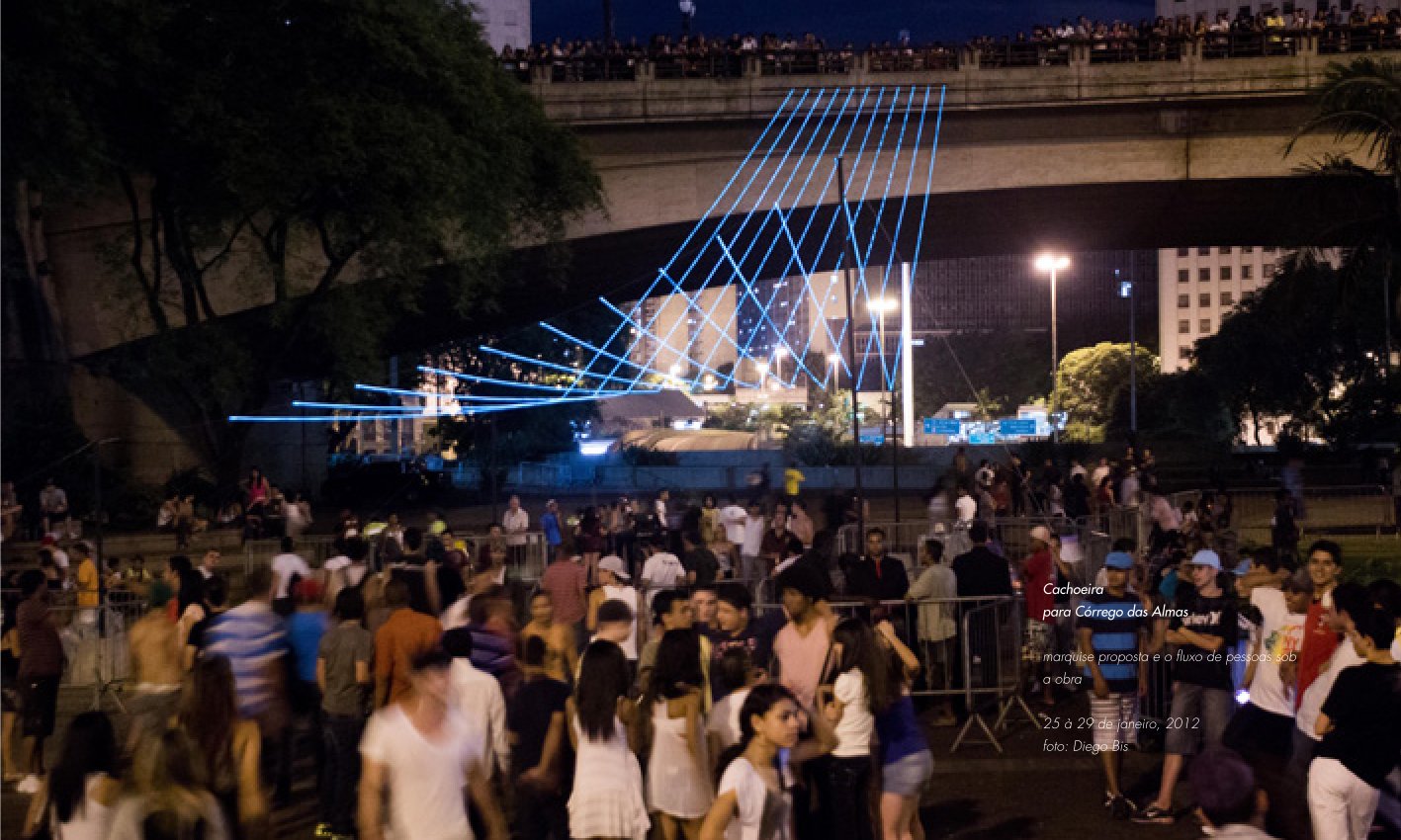
In 2012, I was invited to create a public artwork in downtown São Paulo, as part of the first edition of URBE, Public Art Exhibition, promoted by CCBB. I chose to reveal something invisible: the Córrego das Almas, channeled beneath the pavement of the Anhangabaú Valley. I designed a path of light using 500 meters of electroluminescent cable, segmented in 40-meter sections, descending from the Viaduto do Chá to the valley, tracing the memory of the river that once flowed there.
The work didn’t decorate the space, it revealed a buried infrastructure. All of São Paulo is crossed by rivers that were channeled, hidden under the asphalt during the urbanization process. Cachoeira made this forgotten layer of the city visible, proposing a change in perception about the territory we occupy. The luminous cable was my paint, technology was the medium. For five nights, from 8pm to 10pm, the stream existed again as light.
I was 25 years old. I already worked with video, visual programming and live cinema at the BijaRi studio, but this was my first large-scale urban intervention. The technique required rigorous study, not just of electroluminescent cable specifications, but of the valley’s topography, the stream’s history, of how to mount a temporary installation in public space. Revista IstoÉ compared the work to Olafur Eliasson’s waterfalls in New York. But the gesture was São Paulo’s: revealing what’s implicit, opening a reflection, not closing an answer.
Thirteen years later, this same impulse, making the invisible visible, reappeared in Floresta Utópica (Farol Santander, 2025). There, I revealed invisible natural systems through generative projections. Here, I revealed a buried river through continuous light. Cachoeira is the root. It’s where I learned that public art isn’t ornament, it’s a change in the state of perception.
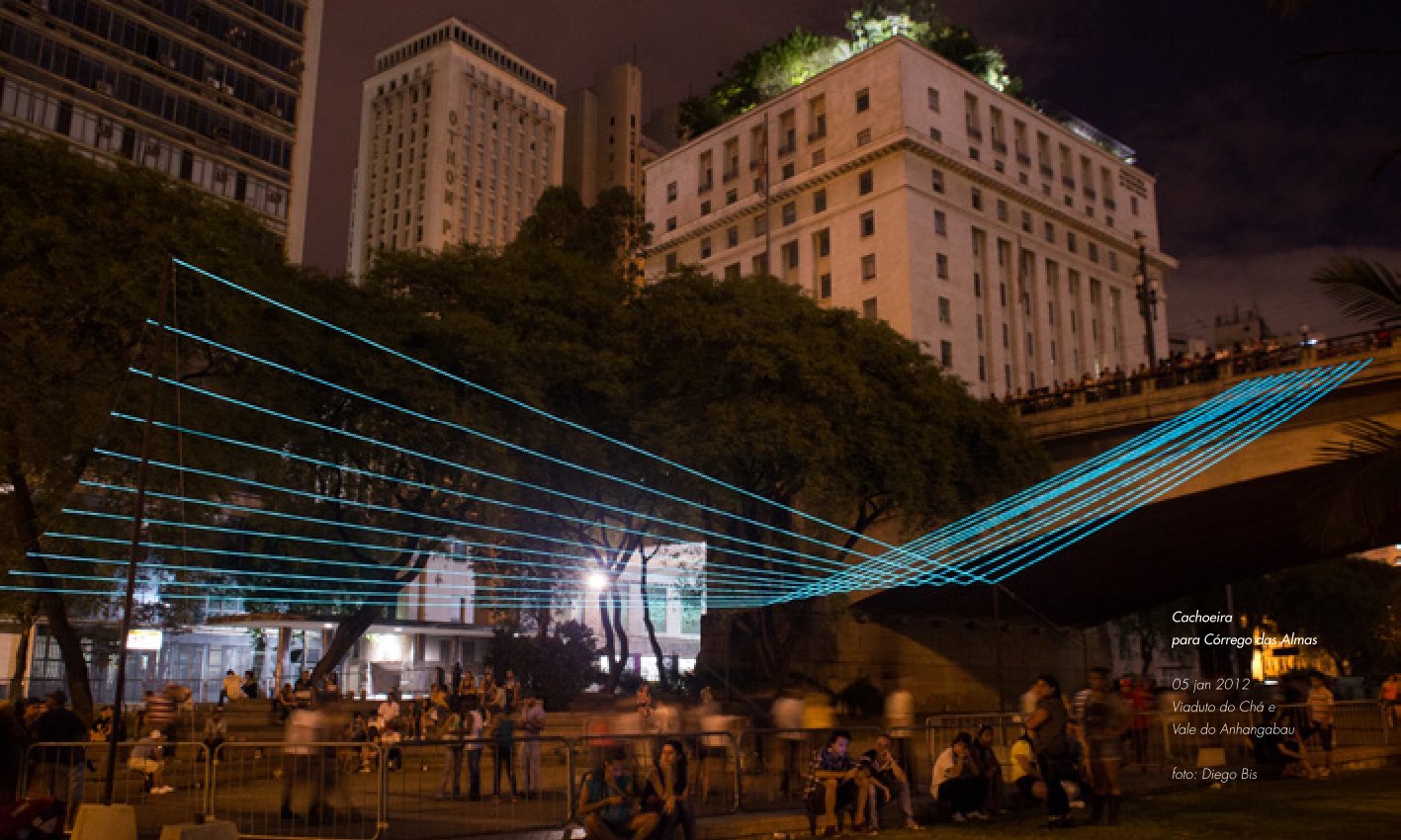
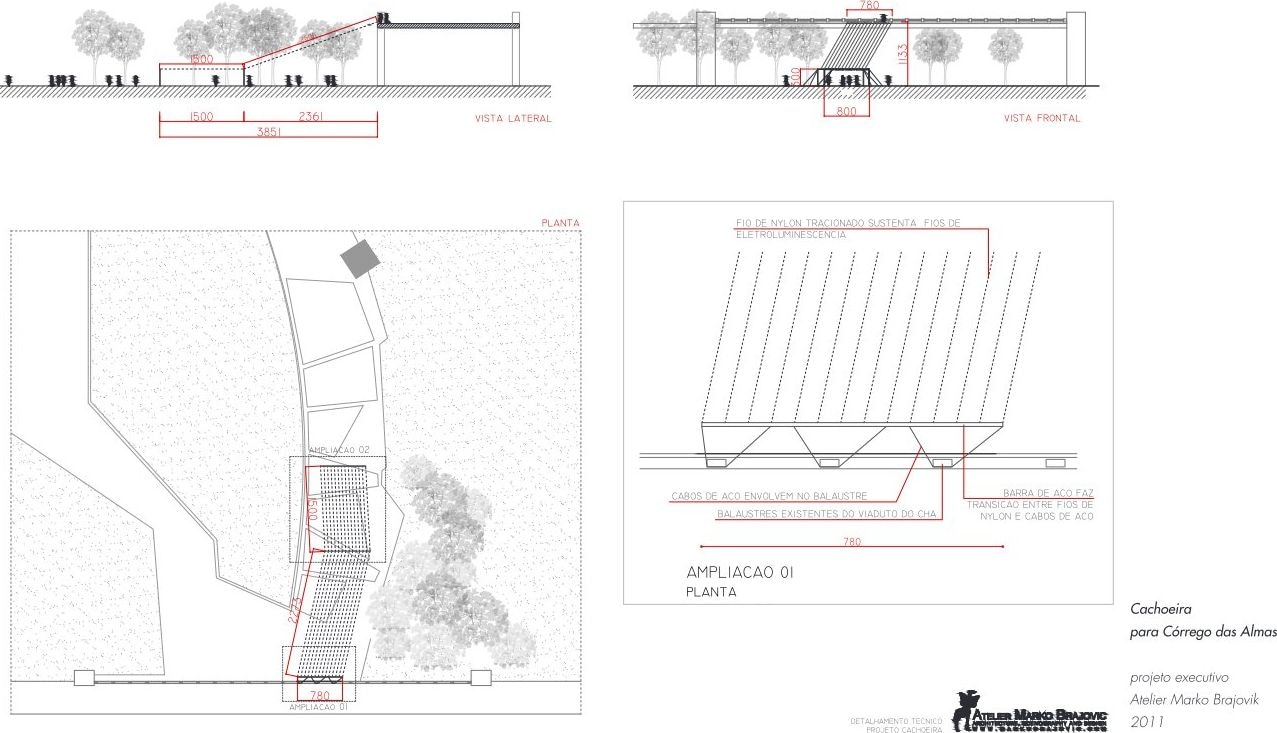
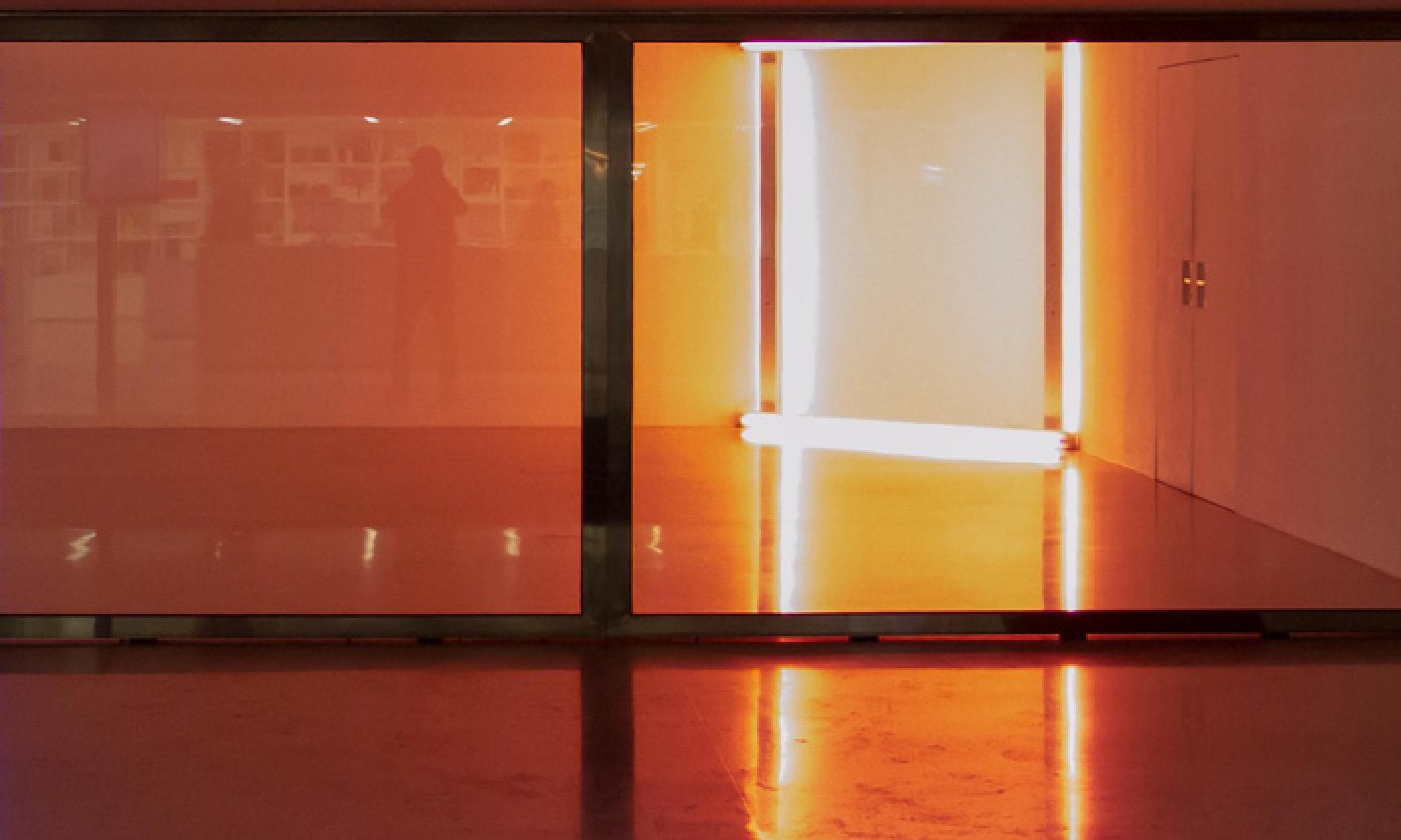
Luminous intervention that revealed the buried path of the Córrego das Almas in the Anhangabaú Valley with 500 meters of electroluminescent cable.
- Number
- 003
- Editorial status
- Felipe-authored work
- Reading regime
- foundational / territory / lineage
- Status
- REALIZED
- Year
- 2012
- Location
- Vale do Anhangabaú e Viaduto do Chá, São Paulo
- Context
- URBE / CCBB / arte pública
- Type
- ARTE PUBLICA
- Series
- LUZCIDADE
- Technique / medium
- 500m de cabo eletroluminescente
- Extension
- 500m de cabo eletroluminescente em segmentos de 40m
- Duration
- 5 noites · 20h–22h
- Realization
- URBE — Mostra de Arte Pública · CCBB
Public connections that situate this work inside the archive before the narrative text.
Images 05 and 06 are pages from the undergraduate thesis LUZCIDADE (FAU-USP, 2013), included here as archival documentation of the work's trajectory. The exact credit for these reproductions remains to be confirmed.