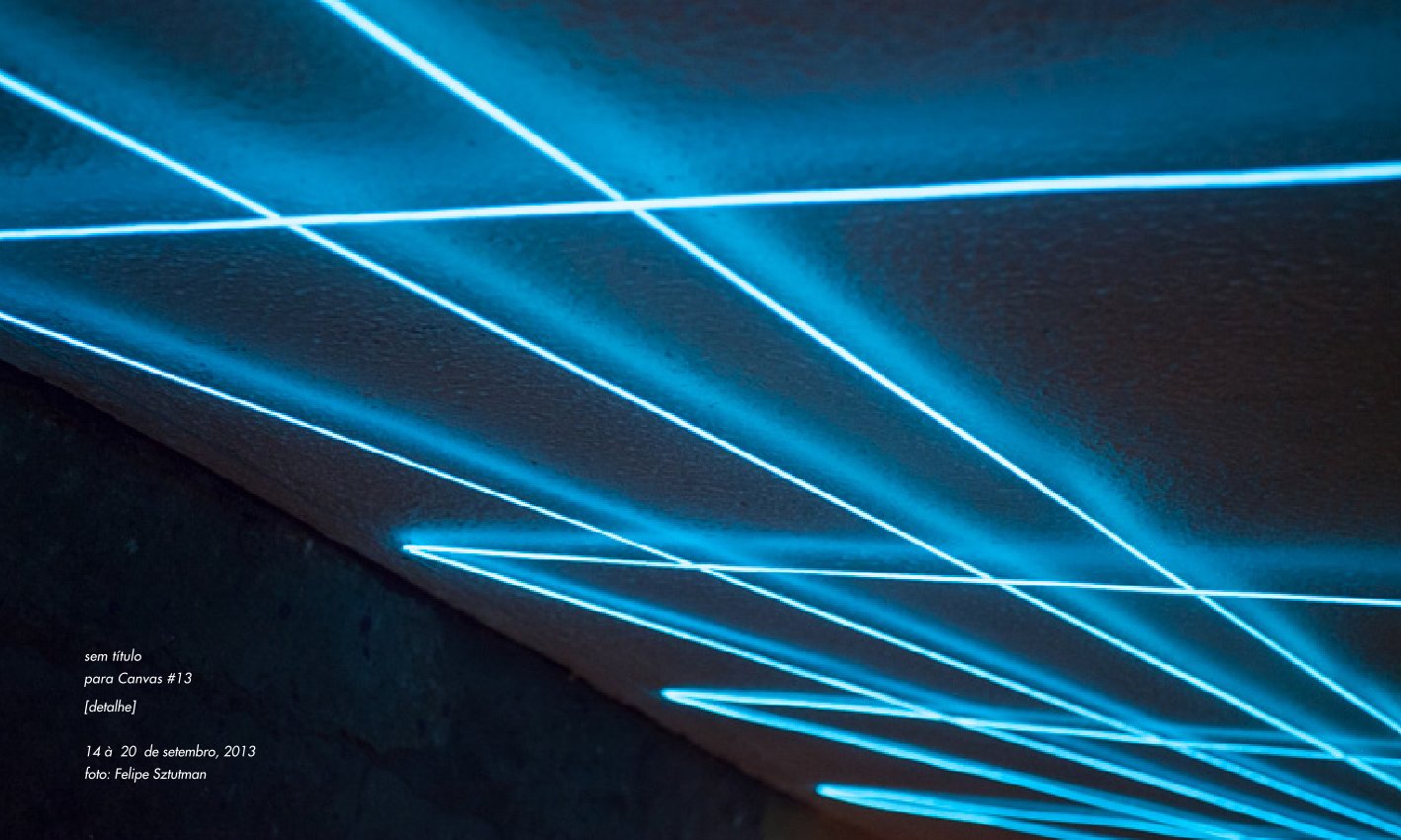
sem título, para Canvas #13
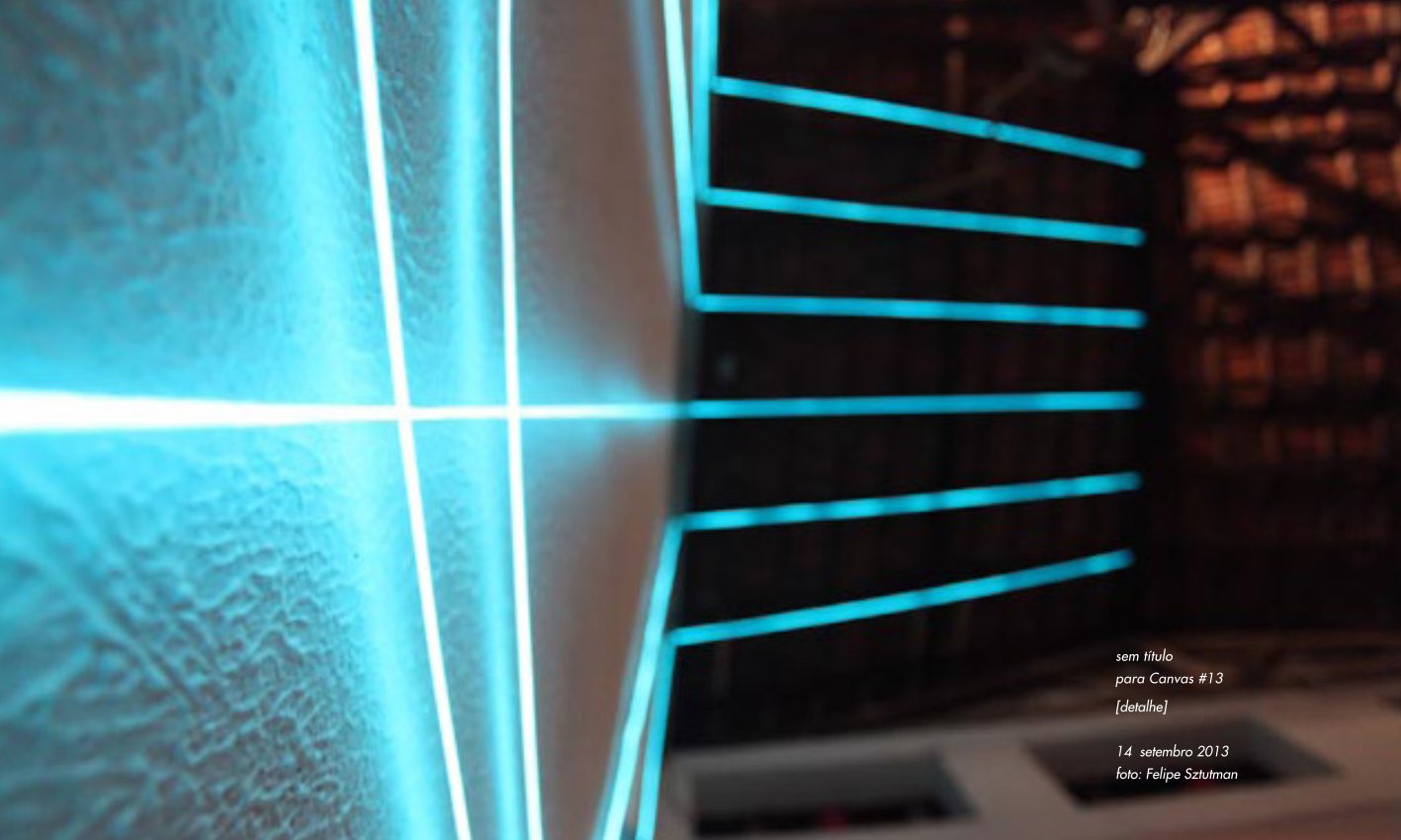
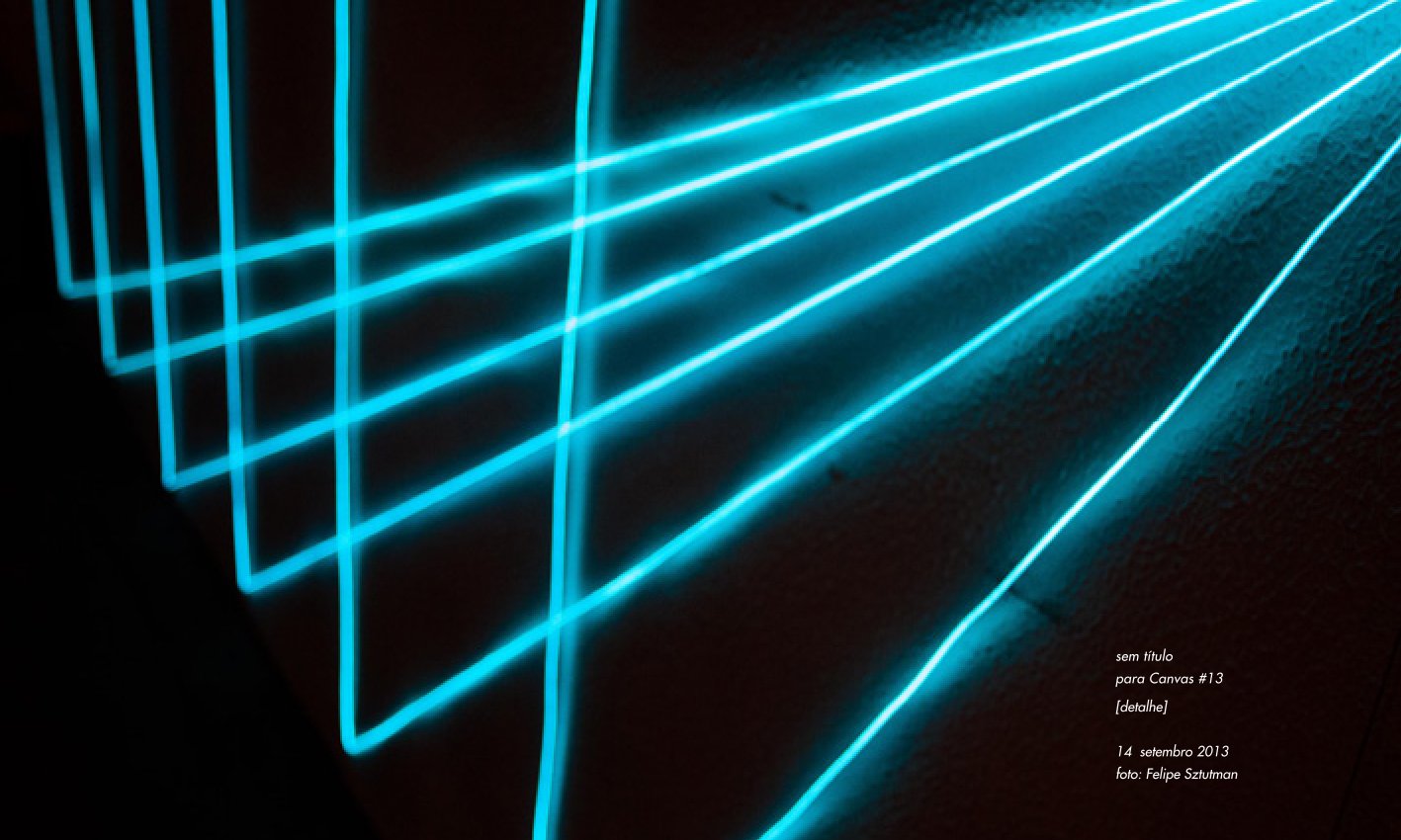
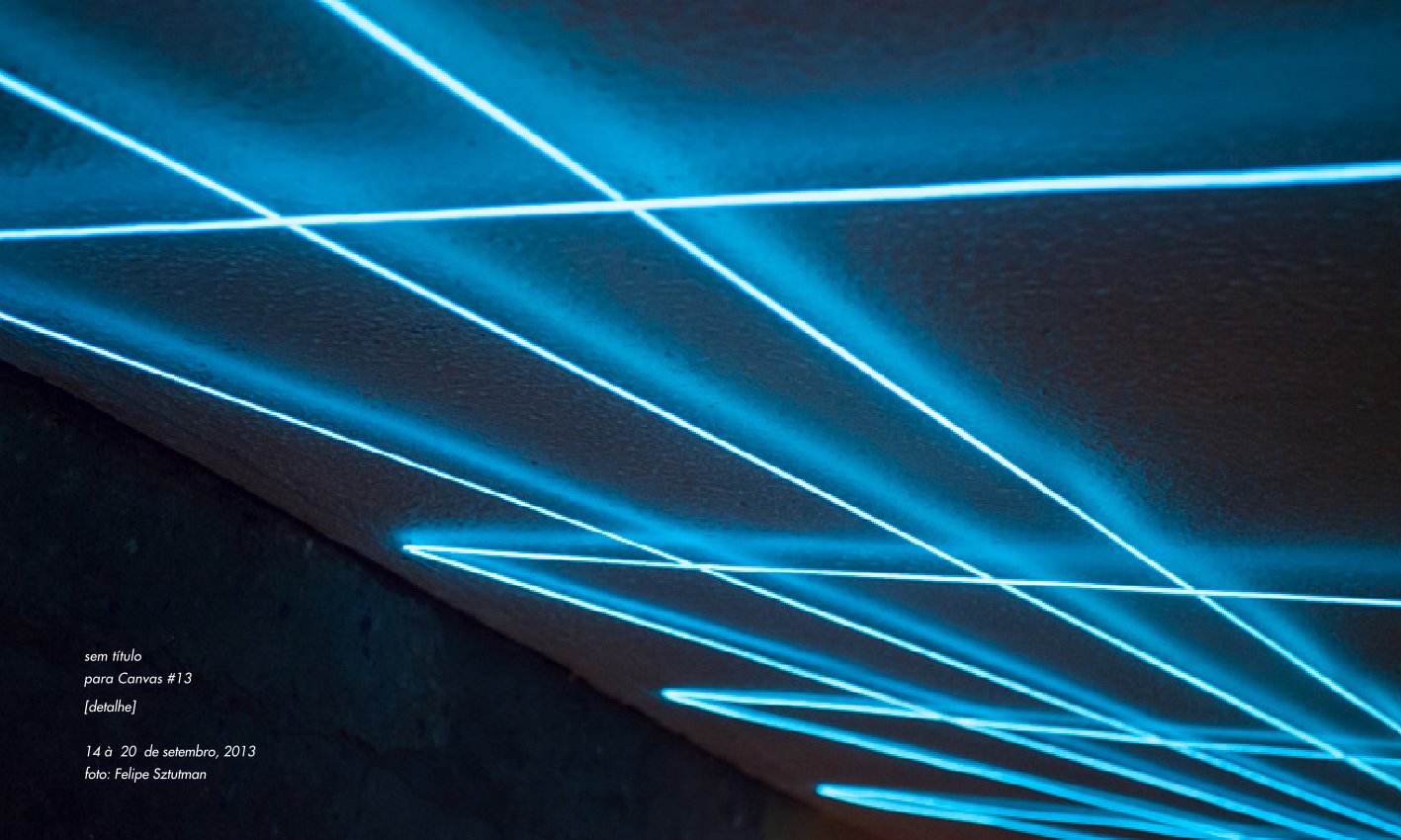
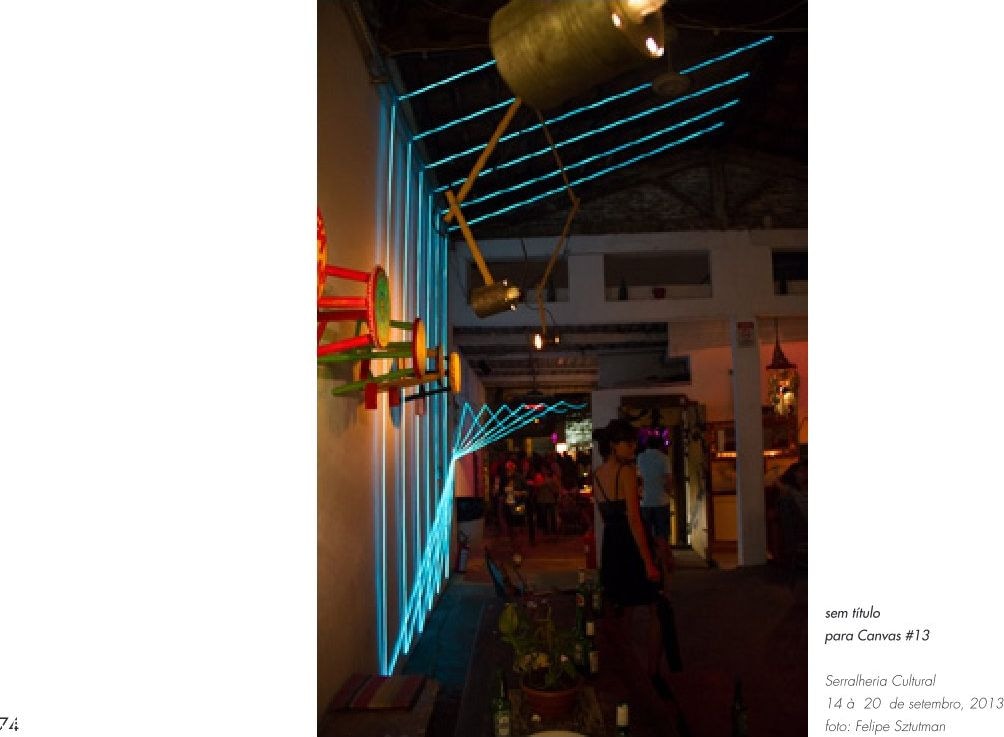
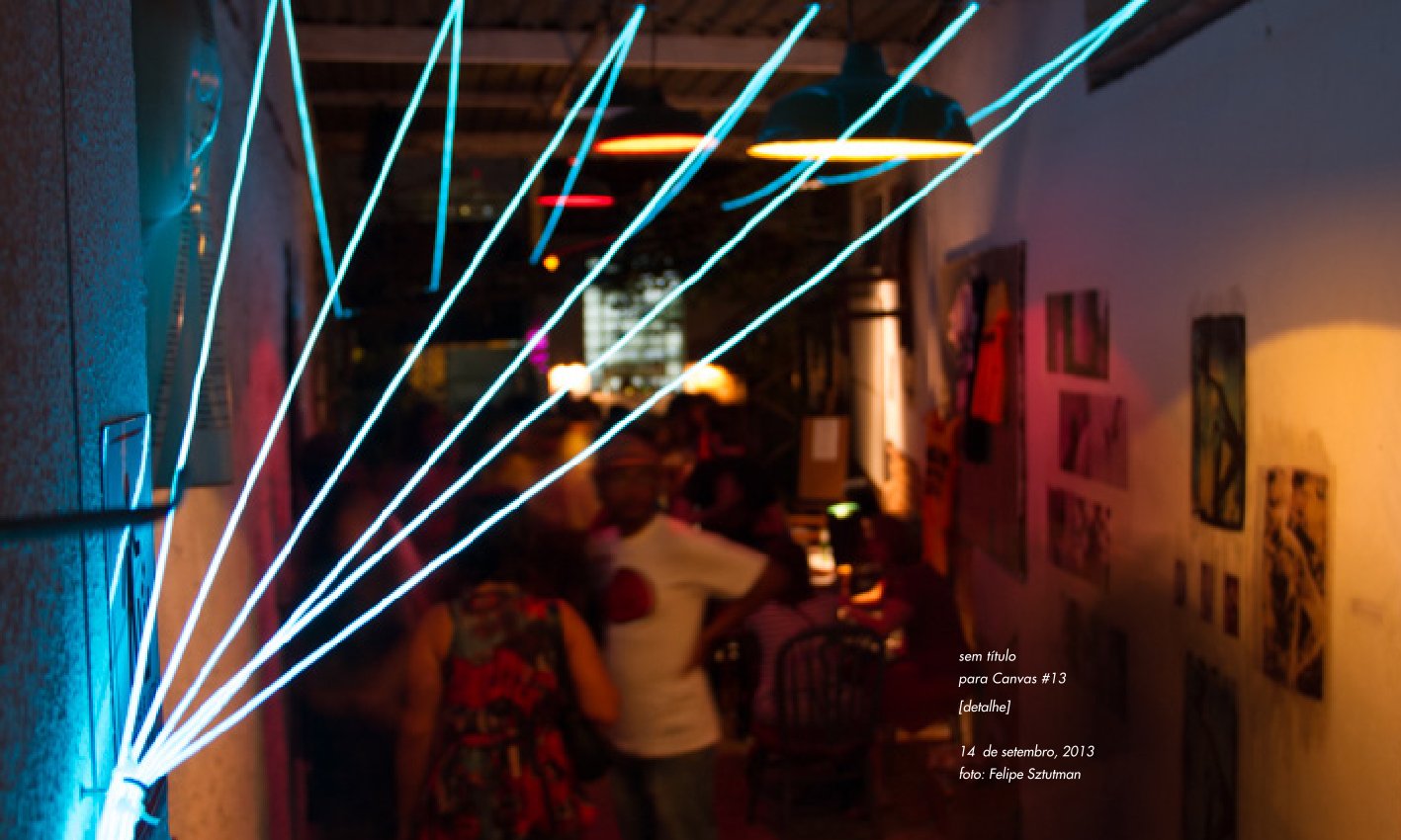
In September 2013, I designed a luminous installation for Serralheria Cultural during the 13th edition of the Canvas festival, organized by Felipe Brait and the ZoomB audiovisual collective. It was the second work in a series I called LUZCIDADE — five works made between 2009 and 2013 where I investigated light as matter that defines space. I started from the structural vertex that supports the Serralheria roof. From there six electroluminescent cables emerged parallel to the roof rafters, descended down the wall, reflected converging to a single point at eye level, and then separated again composing a horizontal plane parallel to the corridor floor. I used the 500 meters of cable left over from Cachoeira — the installation I had done in the Anhangabaú Valley in January that year for the first URBE Exhibition at CCBB.
The scale created intimate environments within the festival. The exchange with the public was one of the richest experiences I’ve ever had. For those who frequented Serralheria it was undeniable: the place had undergone an enormous sensory alteration. New planes, vanishing points, spatial relationships blending with the original architecture. I was mapping the existing space through light — not decorating, not illuminating. Consciously drawing through geometric constructions another place within the same place.
This work was part of my undergraduate thesis in Design at FAU-USP, advised by Professor Carlos Zibel Costa. I was studying how light had conquered space in art history — from László Moholy-Nagy at the Bauhaus to Dan Flavin in American museums — and trying to understand what it meant to bring this practice to the Brazilian urban context, to festivals, to public space. Serralheria was where I discovered that intimate scale and a relaxed audience could amplify the experience of a luminous installation in a way that the museum space couldn’t.
Credits