LUZCIDADE

Abstract
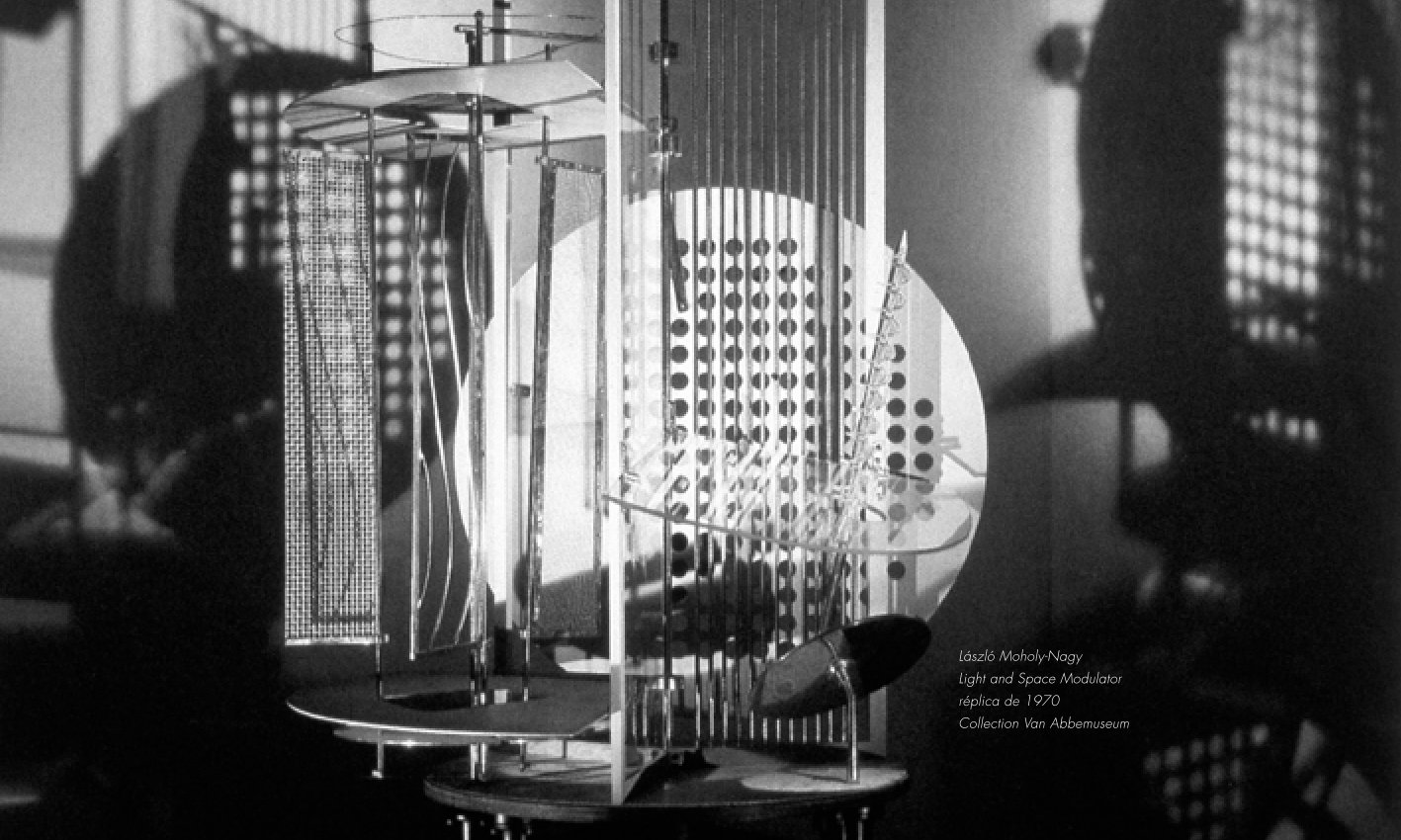
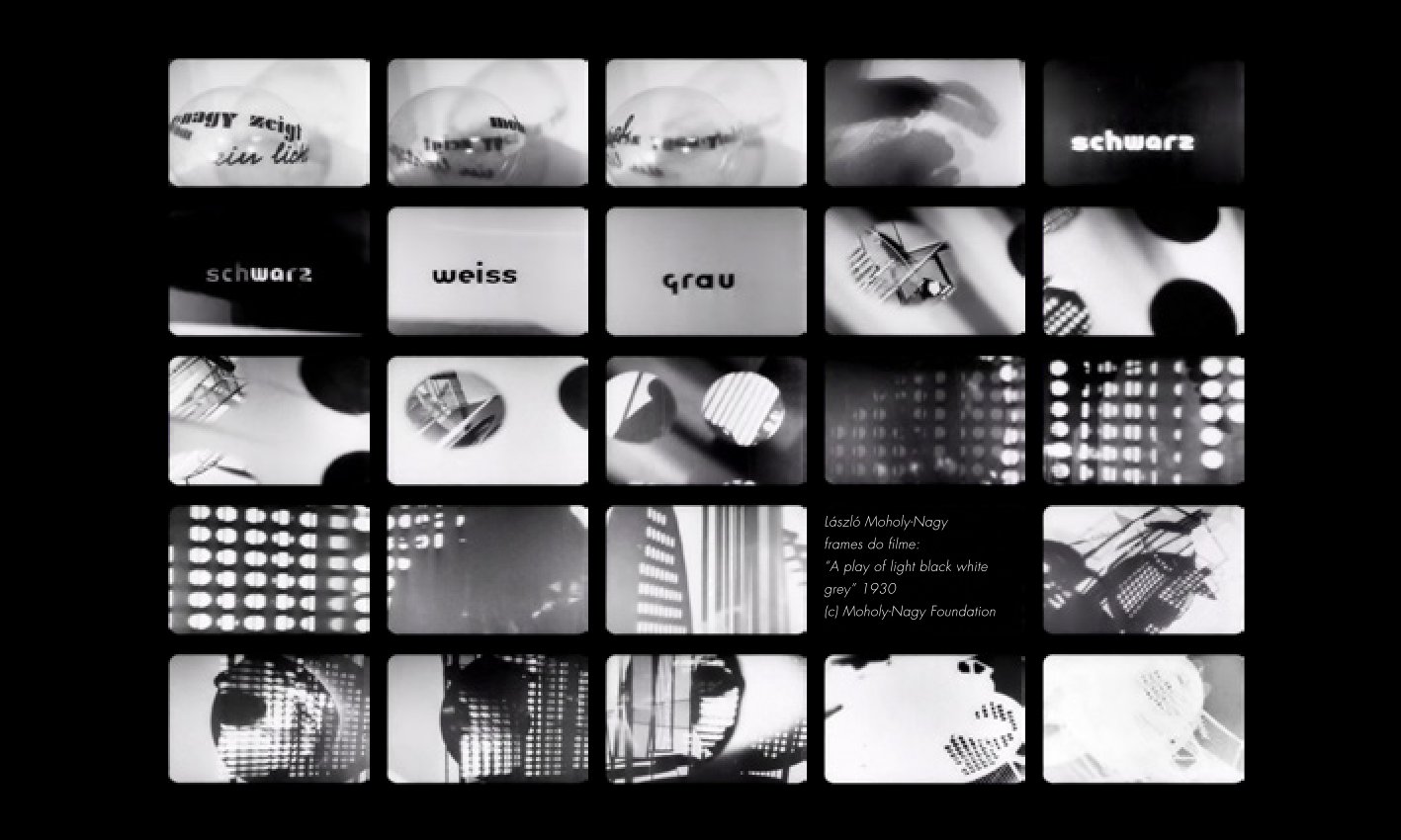
LUZCIDADE [LIGHTCITY] analyzes the trajectory of light as material in art and its relationships with industry. It starts from László Moholy-Nagy’s Light and Space Modulator (Bauhaus, 1920-1930), passes through Dan Flavin’s work (fluorescent light as medium, 1960s-1990s), and arrives at LUZCIDADE — a series of five light installations I created between 2009 and 2013 in different spatial contexts in São Paulo and the Mantiqueira Mountains.
Advisor: Carlos Zibel Costa Panel: Giselle Beiguelman Program: Design, FAU-USP, 2013
The lineage
Moholy-Nagy — light as material
At the Bauhaus, Moholy-Nagy proposed that light and space could be worked as materials — in the same way as wood, metal, or ceramics. His Light and Space Modulator (1922-1930) was the first parametric work of light: an electromechanical system where controlled variables constructed different spaces through the projection of shadows and reflections.
“The machine cannot be used as a shortcut to escape the necessity of biological experience.” — Moholy-Nagy, quoted by Lewis Mumford
This phrase has haunted me for thirteen years. In 2026, it reappeared as firmware in my cognitive implant: “When production exceeds the body’s absorption → stop.”
Dan Flavin — the lamp as medium
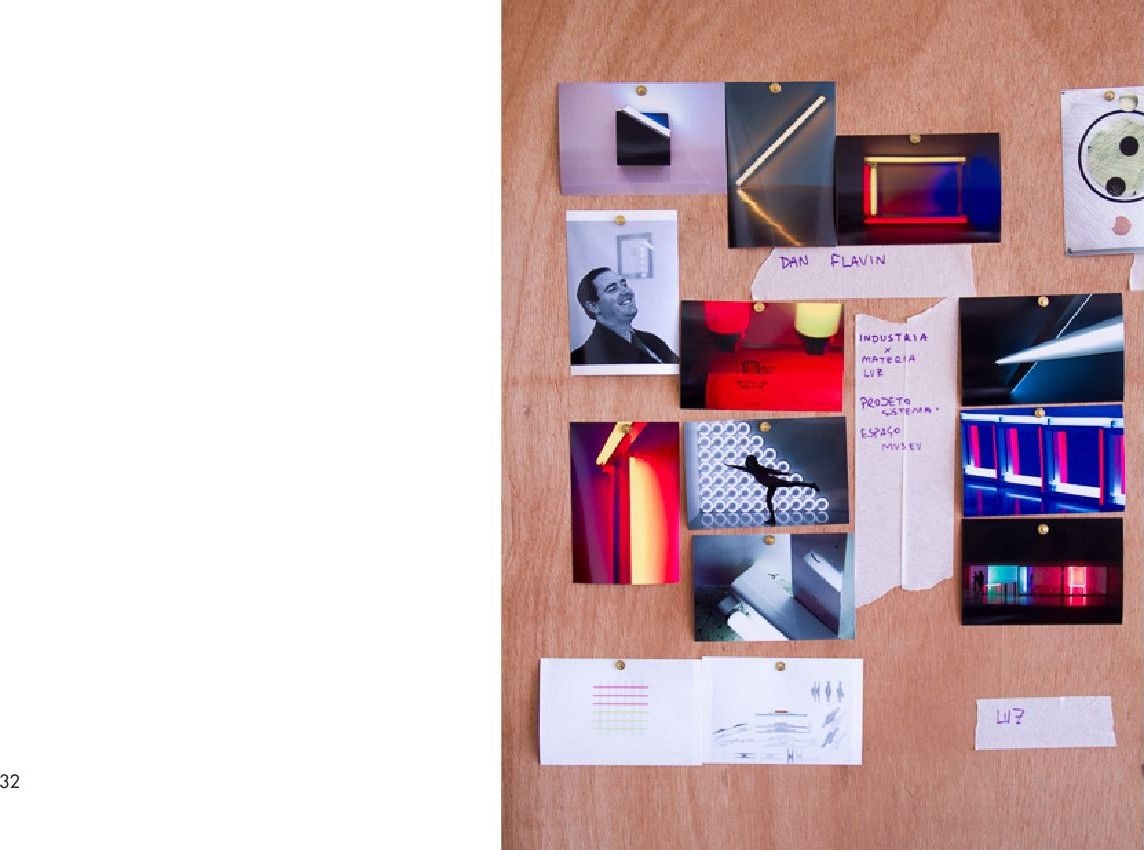
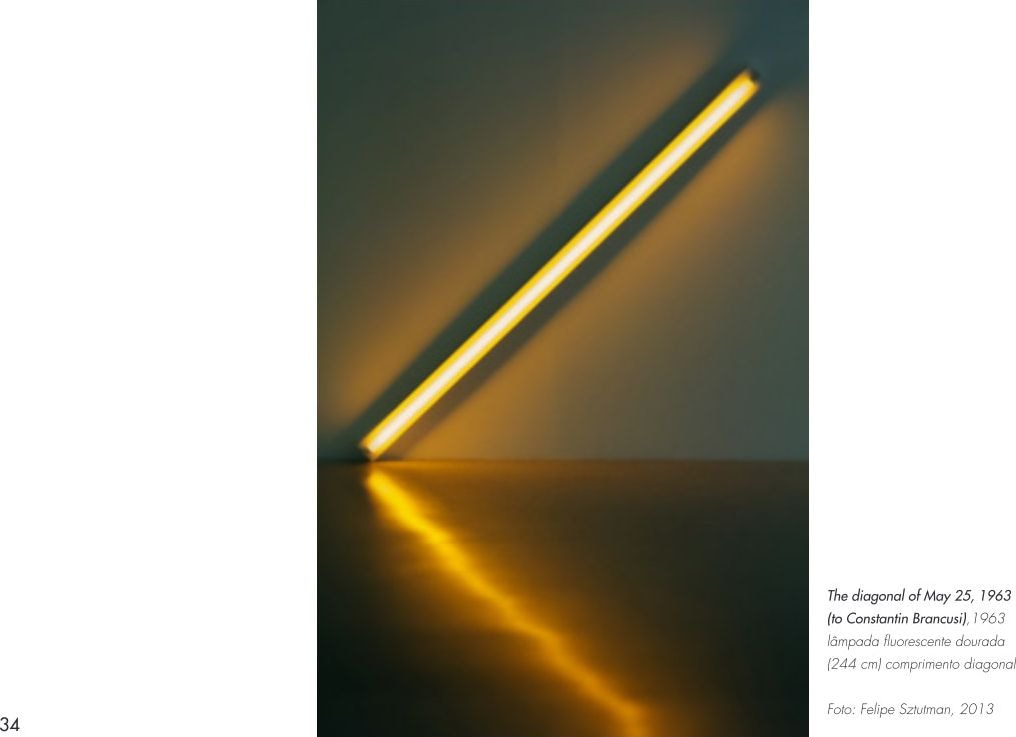
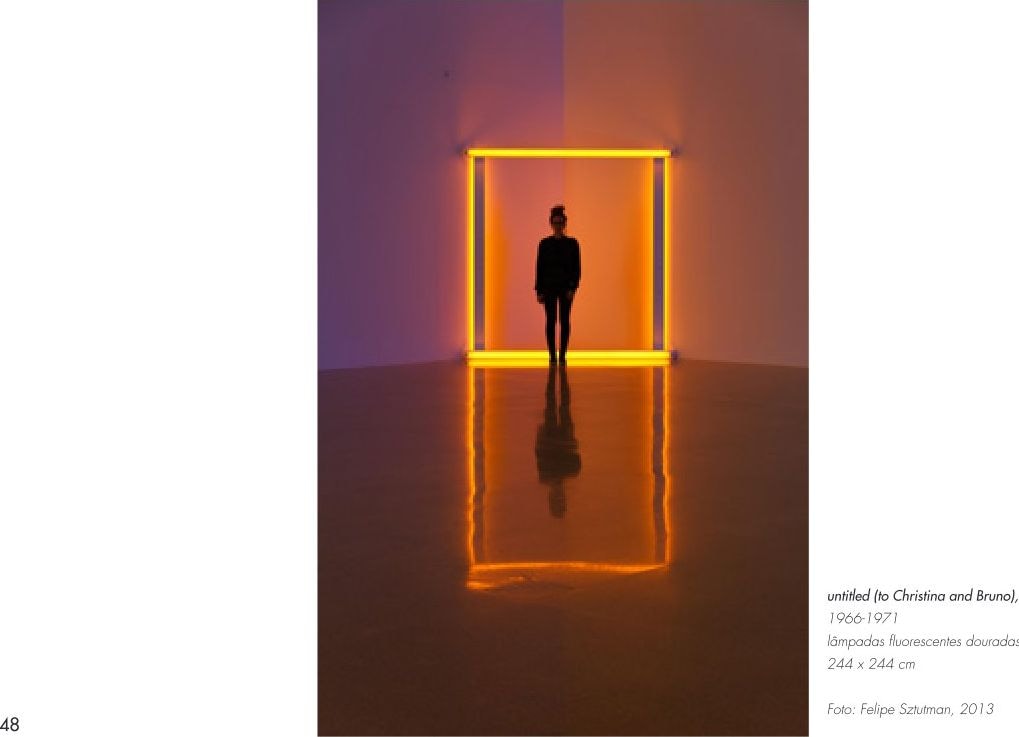
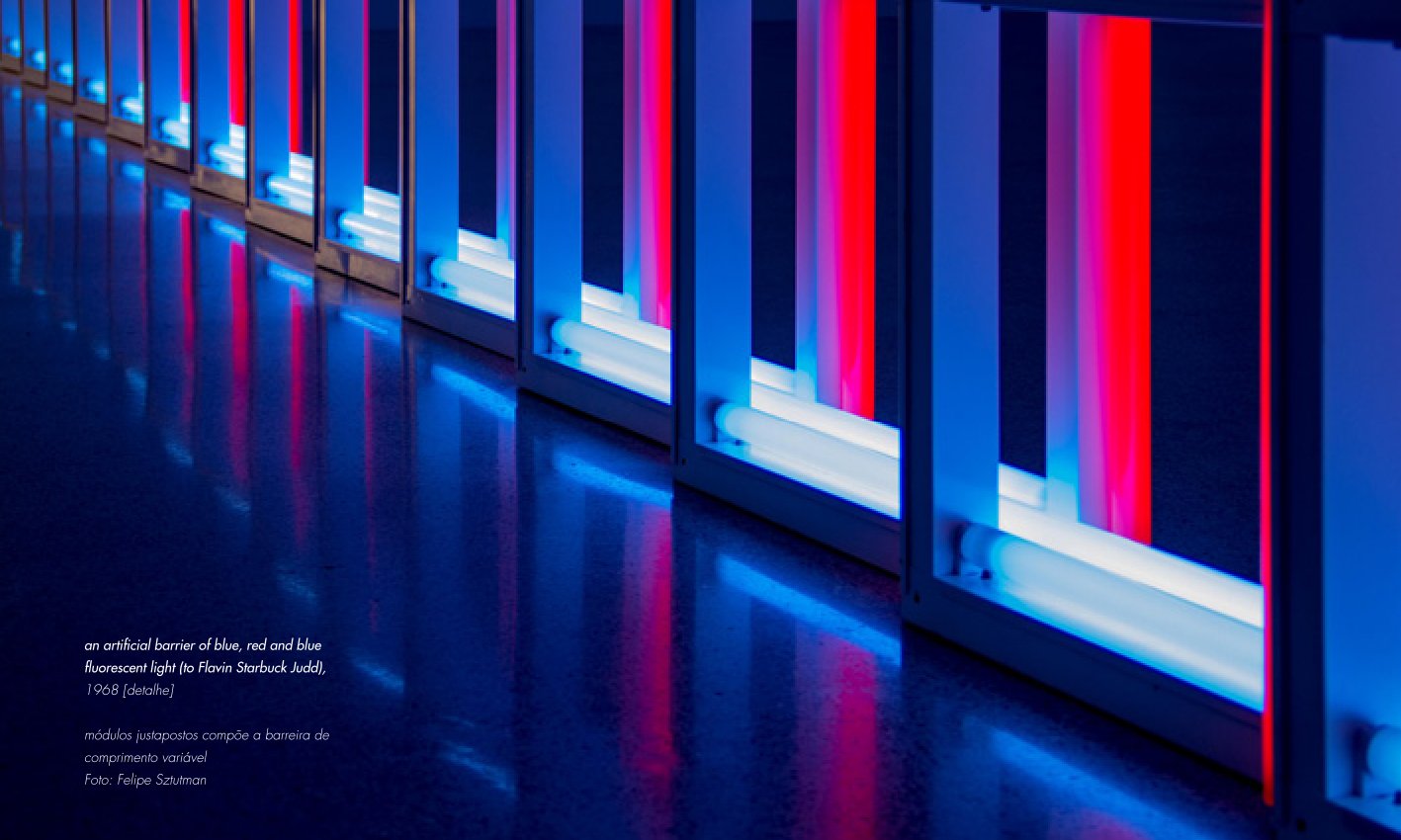
Flavin worked exclusively with commercial fluorescent lamps for over thirty years. He didn’t project light onto space — he inserted the lamp into space as a sculptural element. The emanated light painted walls, dissolved corners, created environments that didn’t exist before the lamp was turned on.
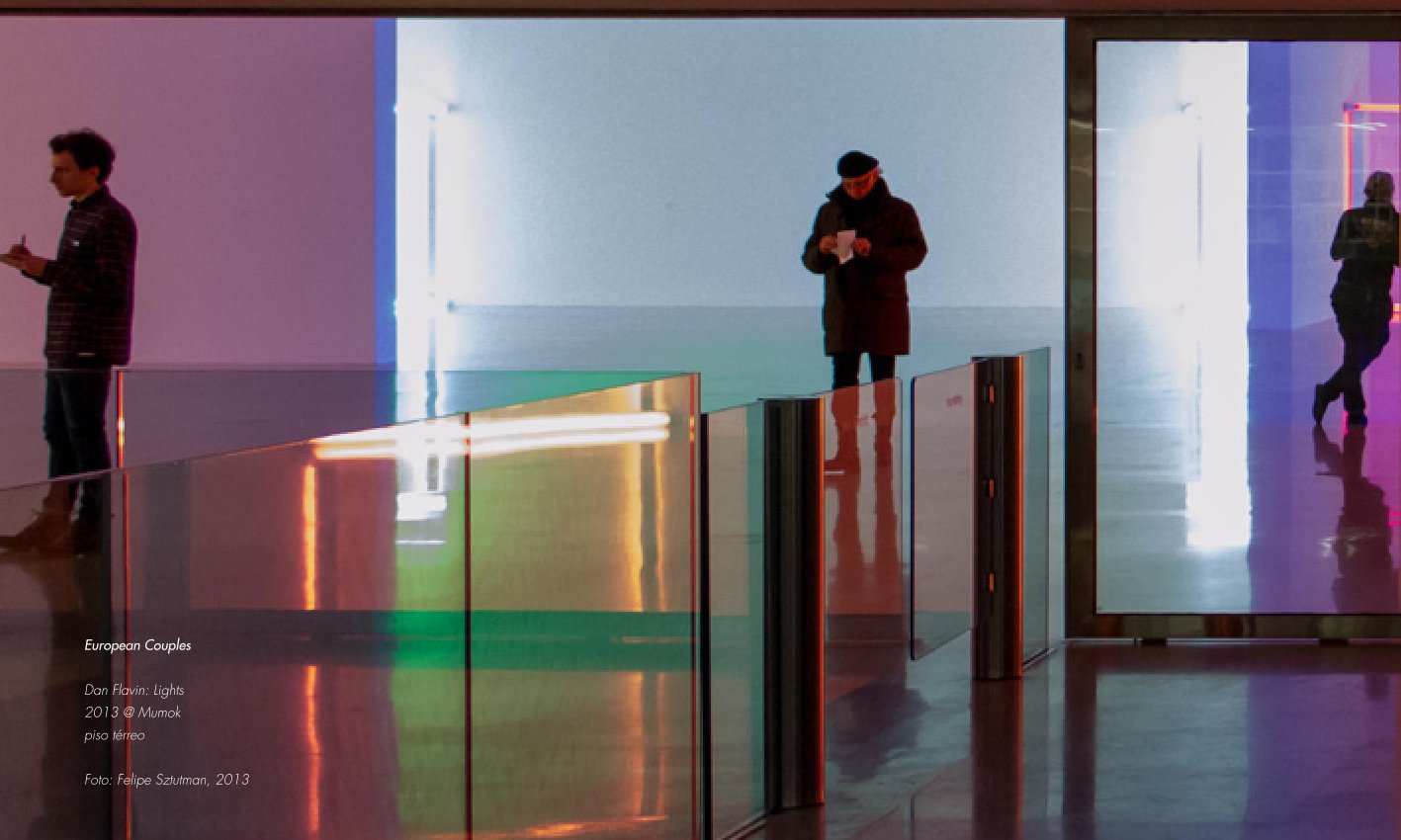
In January 2013, I visited Dan Flavin’s Lights exhibition at Mumok in Vienna. This experience injected the fuel that was missing for the unfolding of the work. It sensitized me and impregnated in me a sense of belonging — the identification of a real field of action.
LUZCIDADE — the field
The five works in the series explore light as material in São Paulo’s space:
-
Object in the Form of: Space (2009) — LabMIS. 1,444 fiber optic terminals, sound, aroma. First complete system.
-
OccupyCopan (2011) — Copan Building. Tubular lamps (yellow, blue, red) tensioned by steel cable in a void between two floors.
-
Waterfall, for Córrego das Almas (2012) — Anhangabaú Valley, URBE/CCBB. 500 meters of electroluminescent cable revealing the buried river.
-
untitled, for Córrego Rio Verde (2013) — Beco do Batman. 240 meters of light, bicycle hoops, parametric design.
-
untitled, for Mantiqueira (2013) — Mantiqueira Mountains. Natural waterfall. The natural environment defeated the parametric method — the form emerged from the encounter with nature.
The unsheltered
“In a sense, I feel unsheltered from a field of action; far removed from the original point proposed by the design program; no longer dealing with parameters of usability, ergonomics, readability; I set out in search of a horizon, a shelter for my production.”
I wrote this at 27 years old. Thirteen years later, the field is szt.link. The shelter is AYA. The horizon is working with immersive environments — which was born exactly here, in this series, in this search.
From LUZCIDADE to Utopian Forest
The Mantiqueira (2013) is the seed of Utopian Forest (2025). In Mantiqueira, I took electroluminescent cables to a waterfall and the parametric method didn’t work — nature is irreducible to parameters. Twelve years later, in Utopian Forest, I didn’t try to reproduce nature. I revealed its invisible networks — fungi, soil, water — through generative projections, aromas, and a light sculpture in the form of a waterfall.
The gesture is the same: making the invisible visible. The method evolved.
References
- MOHOLY-NAGY, László. The New Vision. Dover Publications.
- MOHOLY-NAGY, László. Peinture Photographie Film (1925). Nîmes: Chambon, 1993.
- WEIBEL, Peter; JANSEN, Gregor. Light Art From Artificial Light. Hatje Cantz, 2006.
- GOVAN, Michael; BELL, Tiffany. Dan Flavin: The Complete Lights, 1961-1996. National Gallery of Art, 2004.
- FLAVIN, Dan. “…in daylight or cool white: an autobiographical sketch.” Artforum 4, no. 4 (Dec 1965), p. 24.
- ARGAN, Giulio Carlo. Arte Moderna. Sansoni, 1992.
Design Thesis FAU-USP, 2013. Advisor Carlos Zibel Costa, panel Giselle Beiguelman. The complete document is available upon request.