Player 1: 50 Anos dos Videogames
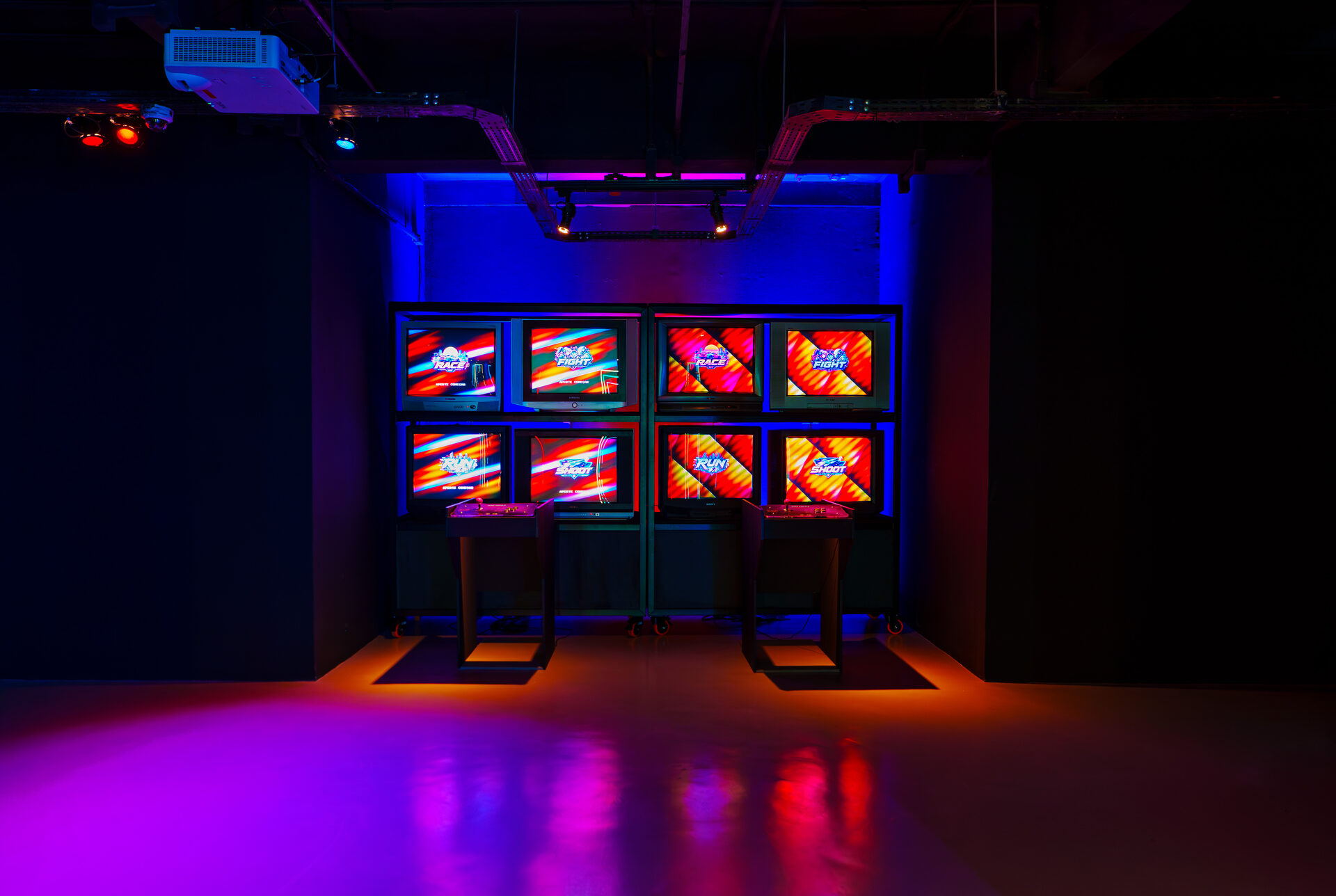
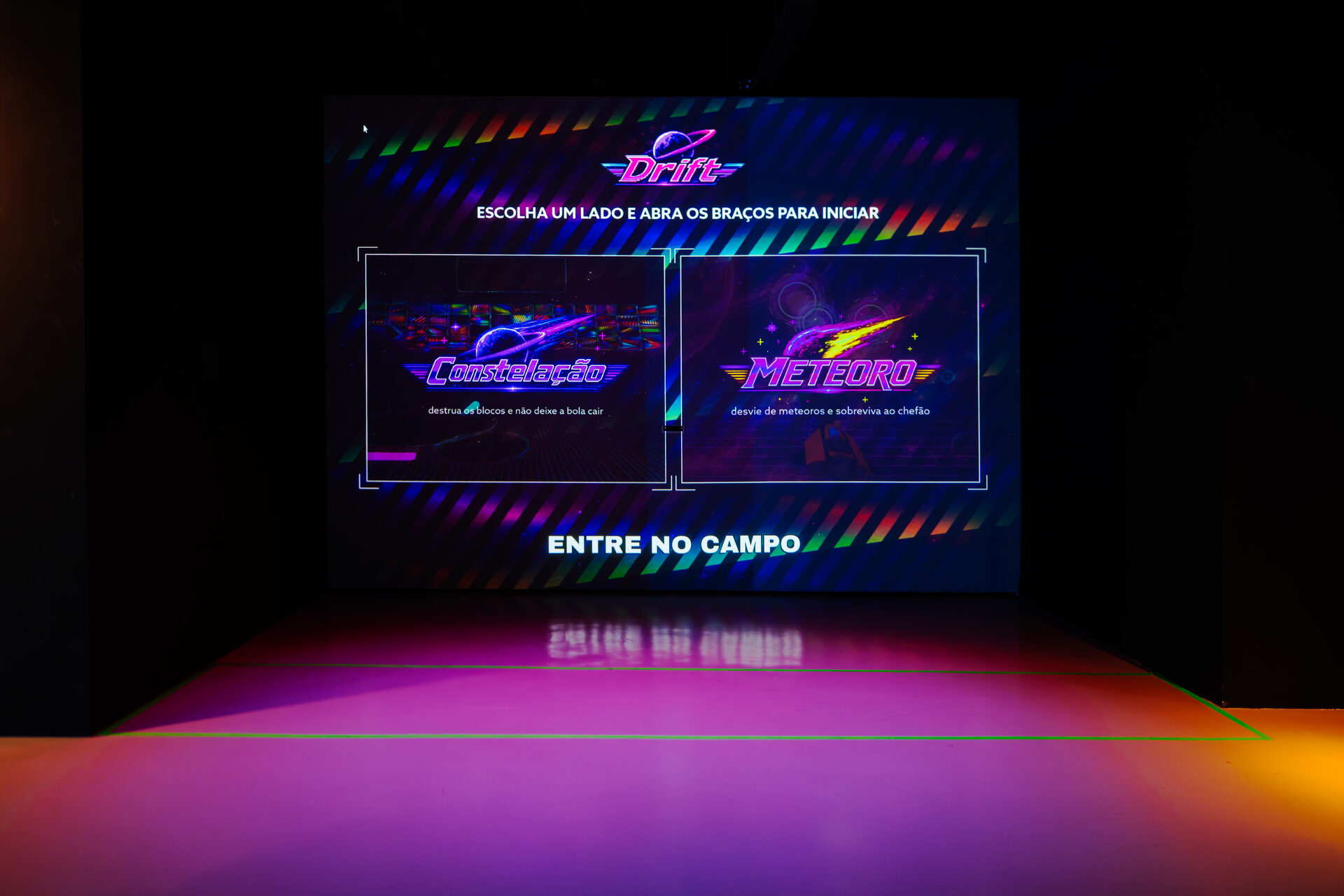
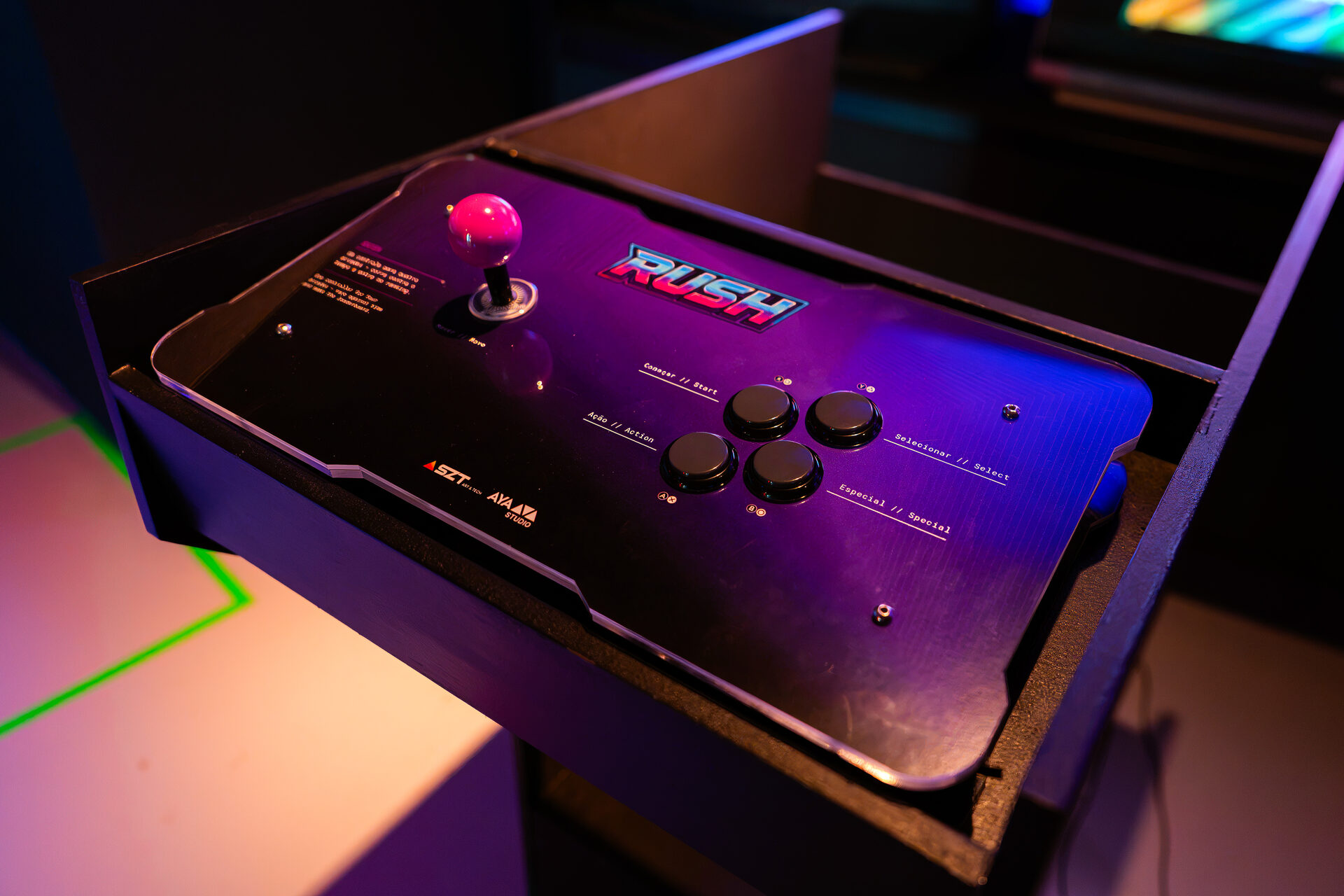
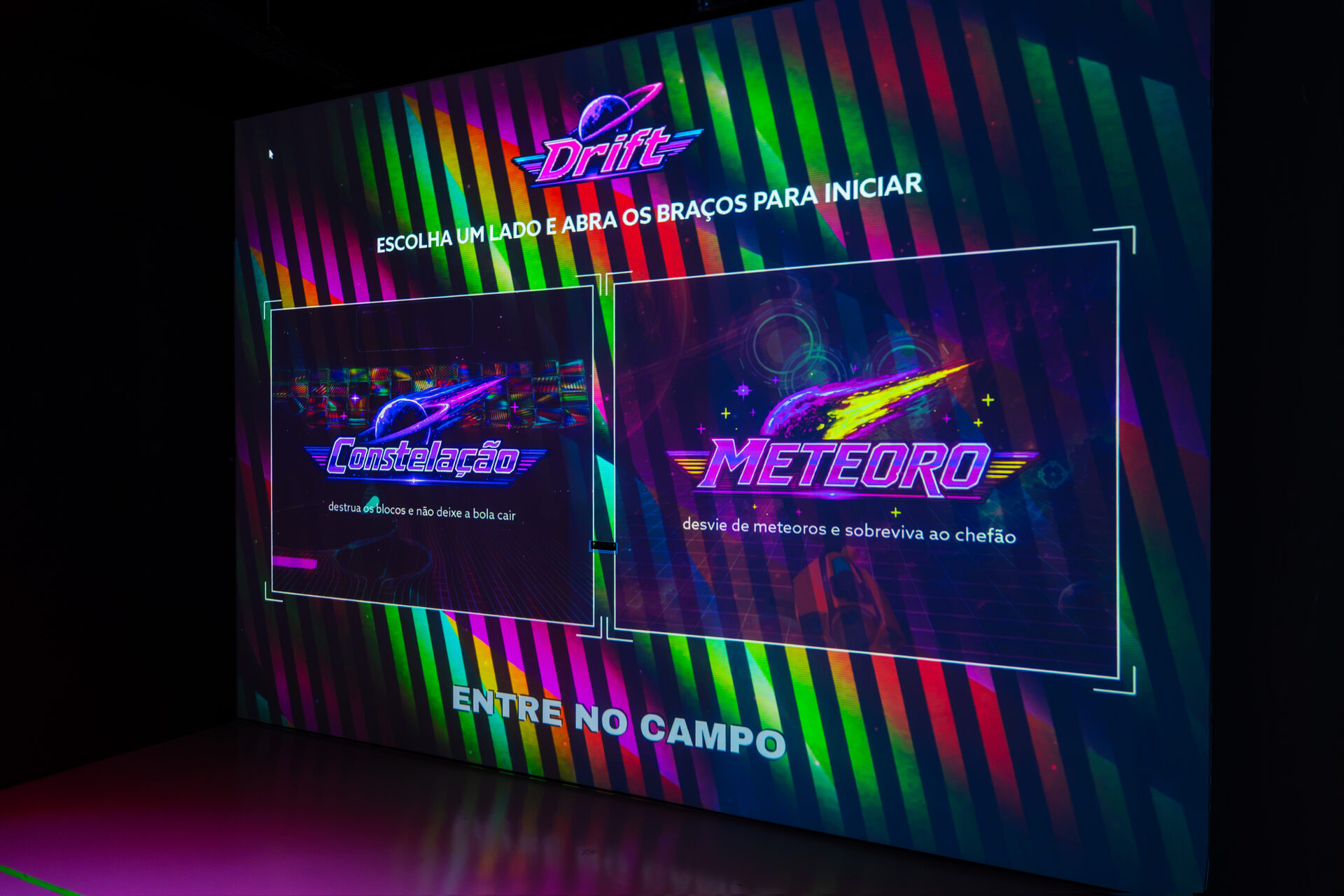
Before I learned to draw, I was already building universes. With Lego, on paper, in video games, in tabletop RPGs, it was always about creating worlds that could be inhabited, systems that came alive when someone entered. Video games were never entertainment to me. They were the place where I learned that technology doesn’t imitate experience, it expands what’s possible to feel and do. In the current archive, Player 1 is an exhibition open to the public and also the first place where this foundational territory appears directly inside the white cube. The project describes four interactive installations that use the body as interface: in STRIKE, gestures become energy attacks against light entities. In DRIFT, the body moves to dodge digital objects. In TRACE, the finger explores fifty years of history through a collection curated by Antonio Curti. In RUSH, hands execute under pressure in a vertical tower of four stacked CRTs, each screen a minigame that must be beaten against the clock.
The grammar is simple: eight verbs, one body. Attack, dodge, explore, execute. Run, shoot, drive, fight. There are no intermediate controls, no joystick, no buttons. The body is the control. This is not metaphor. It’s the literal reconfiguration of the relationship I learned in the 1990s, when my hand held a SNES and my eyes fixed on a 29-inch CRT. Here, the screen grows until it occupies the room. Gesture becomes visible. Speed, precision, the dance between intention and execution, everything that was encoded in button-pressing now unfolds in space. Each experience isolates a fundamental behavior from games and materializes it as choreography. It’s not nostalgia. It’s archaeology of the vibratile body, what was inscribed in me, and in an entire generation, from fifty years of playable culture.
The proposed structure operates in two layers: Alex Mamed’s collection functions as a living archive of this history. Antonio Curti curatorially organizes a selection of the collection into nuclei crossing decades of playable culture, from the Magnavox Odyssey to the PlayStation 5 Pro. Consoles, handhelds, experimental controllers, and singular objects establish this historical ground. The four experiences I designed and directed are the contemporary translation: what those fifty years left as a mark on the body, transformed into live interaction. AYA Studio, Brígida on architecture, Raphael Minhoso on renders and RUSH development, Ana Clara on kiosk design, Leonardo on technical sourcing, Ihon on installation, is the productive structure planned to make all this matter in space. I don’t hide the infrastructure. It is part of the argument. Showing how things are made is as important as what they are.
Player 1 is the project where the personal layer appears most strongly. Not because it is autobiographical in a confessional sense, but because I can finally name where I come from as an artist. The 2012 light waterfall came from the same source as the SNES, the same place where the clay worlds and RPG campaigns came from. It took me fourteen years to understand that video games were not only an influence, they were a medium. With the exhibition open, the gesture is clear: treating games not as nostalgic theme, but as a way of thinking body, perception, agency, and time. Antonio saw this before I did. His curation opened the field, the collection legitimizes the history, the experiences test how it can be inhabited.
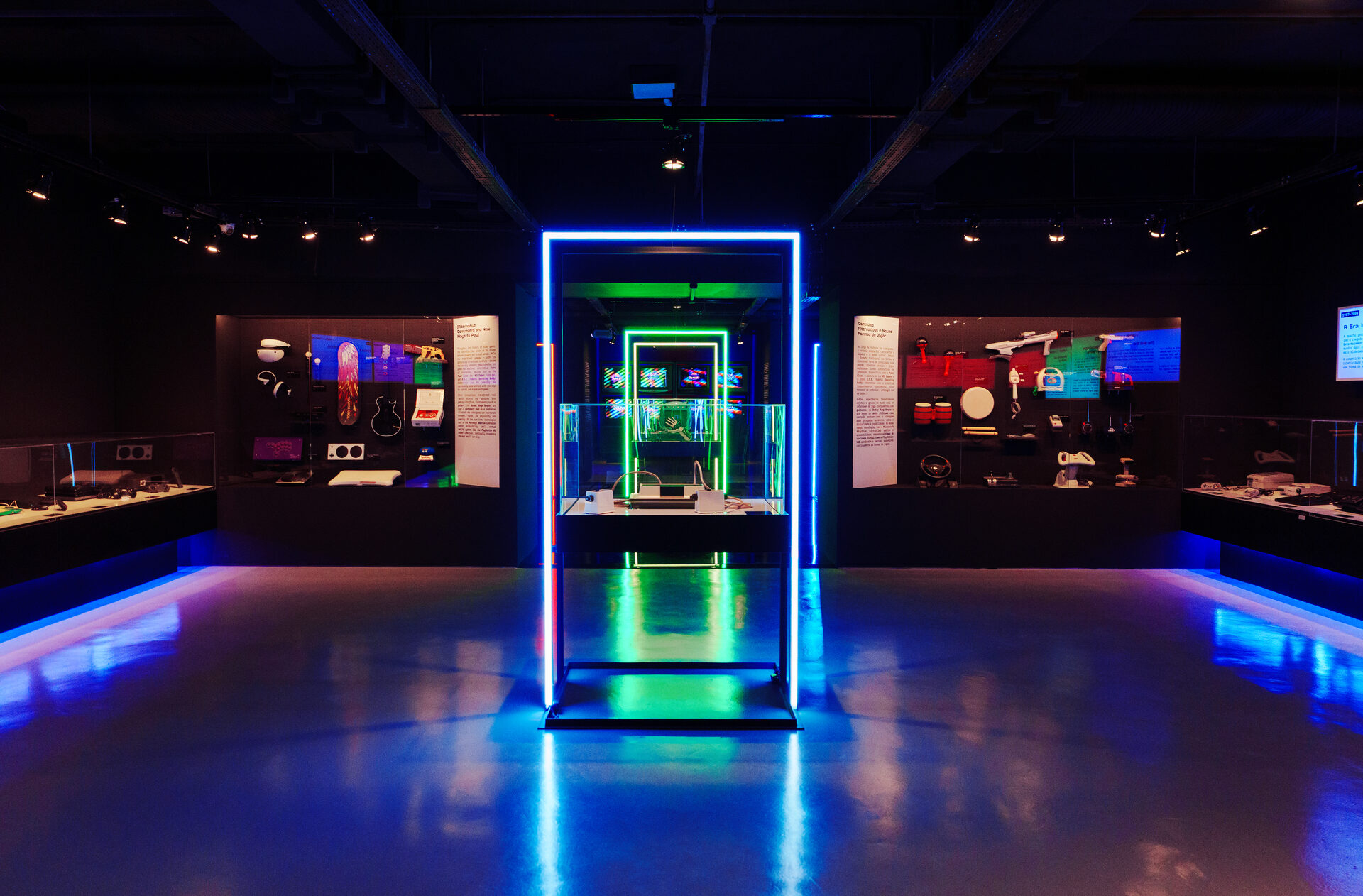
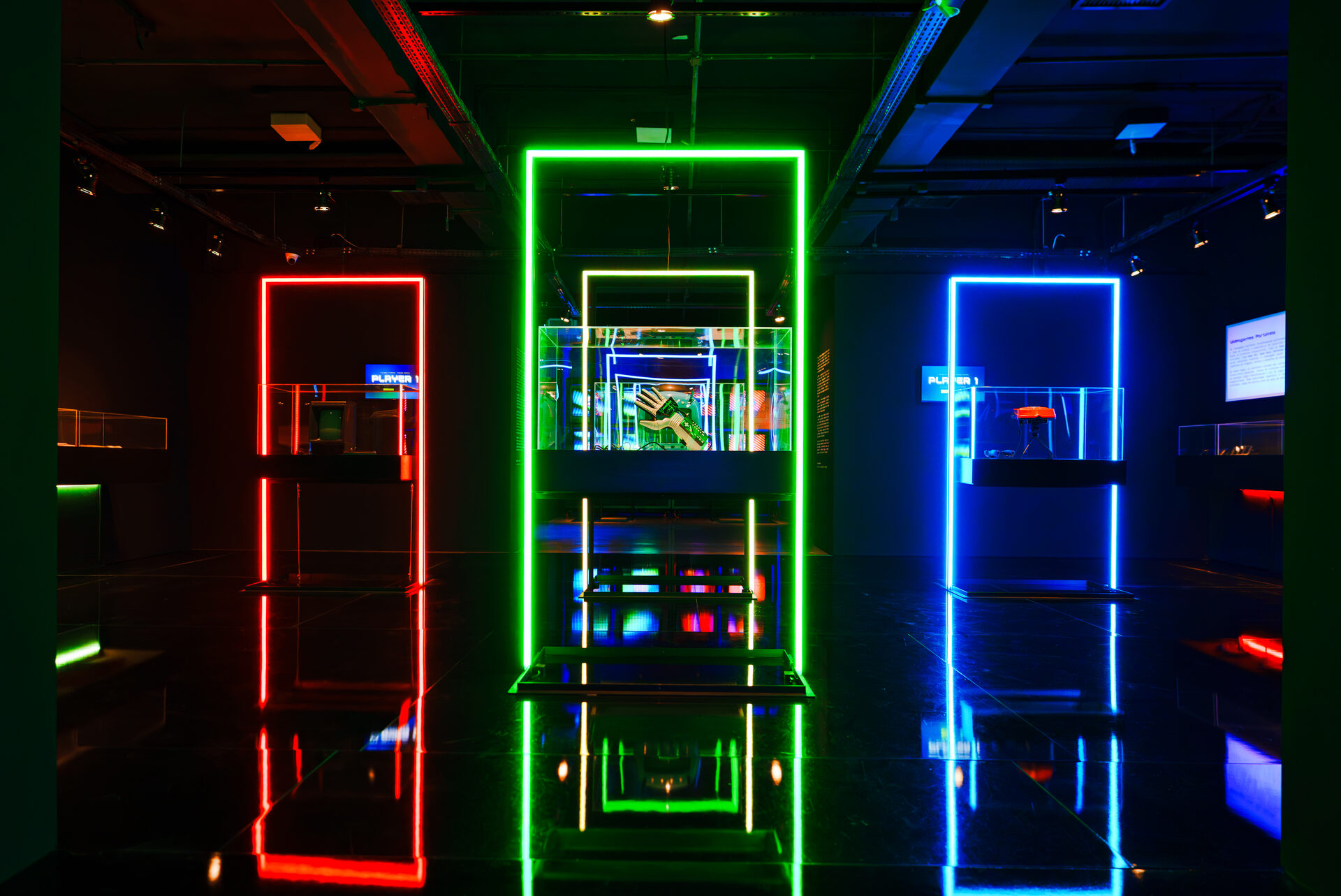
Four experiences in which the body replaces the controller and turns playable culture into behavior in space. Opened on 18 June 2026.
- Number
- 018
- Editorial status
- thematic / collective exhibition
- Reading regime
- system / body / mechanism
- Status
- REALIZED
- Year
- 2026
- Location
- Farol Santander São Paulo
- Context
- instalação-sistema / corpo-interface / jogos como medium
- Type
- INSTALACAO
- Technique / medium
- instalações interativas corpo-interface
- Duration
- abertura em 18/06/2026
- Proposed structure
- Four interactive installations, STRIKE, DRIFT, TRACE, and RUSH, articulated with a historical video game collection
- Body
- No joystick or button: gestures, displacement, finger, and hands operate the playable behaviors
- Archive
- Alex Mamed's collection, curatorially organized by Antonio Curti, functions as the exhibition's historical ground
- Behaviors
- STRIKE translates gestures into energy attacks, DRIFT into dodging, TRACE into collection exploration, and RUSH into timed execution on four CRTs
- Question
- What did fifty years of playable culture inscribe in the body?
The current file names Antonio Curti's curation, Alex Mamed's collection, and AYA Studio roles across architecture, renders, design, technical sourcing, installation, and production, expanded credits will be consolidated during production.
Player 1 opened on 18 June 2026 at Farol Santander São Paulo. The autobiographical layer remains as the origin of the gesture. Expanded credits and closing date will be consolidated as the season runs.